Prof. Mrs. Ibok Oduro, Professor of Postharvest Technology, KNUST and the College of Science's first female Provost, has called for a renewed investment in indigenous African foods as a pathway to strengthening food and nutrition security across the continent.
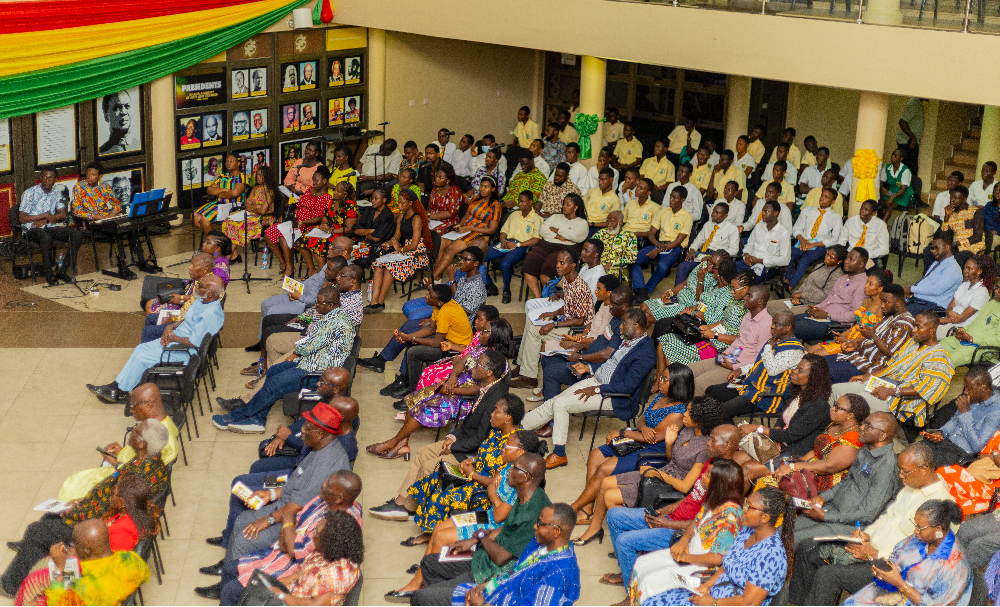
Delivering her inaugural lecture at the Ghana Academy of Arts and Sciences (GAAS) on the theme, "Hidden Harvest: Reclaiming Africa's Plate," Prof. Oduro challenged prevailing assumptions about food security in Africa and highlighted the untapped potential of indigenous crops in addressing nutritional, economic, and environmental challenges.
Describing the lecture as a reflection on her academic and professional journey, Prof. Oduro posed a fundamental question: "How does a continent so rich in agricultural resources still struggle with food and nutrition security?" According to her, the issue is not the absence of food resources but rather a lack of recognition, investment, and confidence in what Africa already possesses.
She noted that Africa's food import bill reached approximately US$97 billion between 2021 and 2023, representing a 19 percent increase within less than a decade. According to her, this growing dependence on imported foods results in a significant outflow of foreign exchange that could otherwise be invested in critical sectors such as infrastructure, education, and healthcare.
"We are a continent rich in biodiversity, knowledge, and agricultural heritage, yet we are becoming increasingly dependent on imported foods," she said. "This shift is moving Africa's plate away from nutrient-dense, climate-resilient, and culturally meaningful foods towards refined carbohydrates, sugars, and fats, contributing to dietary-related health challenges that were once uncommon."
Prof. Oduro expressed concern over the rising prevalence of obesity alongside persistent child malnutrition, describing the situation as a reflection of changing dietary patterns across the continent.
She further highlighted the irony that many indigenous African crops, despite being neglected locally, are increasingly attracting demand in international markets where they are being promoted as "superfoods."
"Many of the indigenous foods we have overlooked hold the answers to some of our most pressing food security and nutrition challenges," she stated.
The professor also drew attention to the significant post-harvest losses affecting food systems across sub-Saharan Africa. She explained that between 30 and 50 percent of food produced in the region is lost before reaching consumers due to inefficiencies during harvesting, storage, transportation, and processing, resulting in annual losses estimated at US$4 billion.
Throughout the lecture, Prof. Oduro showcased research and innovations developed by her team that have transformed indigenous crops into value-added products with nutritional and commercial potential. She emphasized that science and innovation can play a crucial role in unlocking the value of overlooked crops and creating sustainable food systems.
Reflecting on years of research and community engagement, she stressed that lasting transformation requires collective action.
"One lesson has become clear through all the work we have done on promoting indigenous crops," she noted. "Developing products alone cannot transform our food systems unless we change the entire ecosystem. Lasting change requires strong connections between research, industry, farmers, and policymakers."
She highlighted several collaborations involving KNUST and institutions such as the Council for Scientific and Industrial Research (CSIR), which have supported policy development, capacity building, and knowledge transfer initiatives aimed at strengthening indigenous food systems.
Prof. Oduro also pointed to the growth of the traditional model foods class she once conducted with students into the now-popular KNUST Food Festival. The festival has evolved into a platform that brings together researchers, entrepreneurs, industry players, policymakers, and consumers to discover, promote, and commercialize traditional African foods.
"The festival demonstrates that traditional foods are not relics of the past but viable solutions for the future," she said, adding that entrepreneurship remains central to efforts to transform indigenous crops into marketable products and sustainable businesses.
In concluding her lecture, Prof. Oduro urged stakeholders across academia, industry, government, and communities to invest in indigenous food research and value addition, strengthen policies that reduce post-harvest losses, promote local food consumption, empower young entrepreneurs, and foster partnerships that support innovation.
"We have the crops. We have the people. What remains is the will to recognize, invest, and act. Africa's food future will not be imported; it must be cultivated, innovated, and sustained from within," she emphasized.