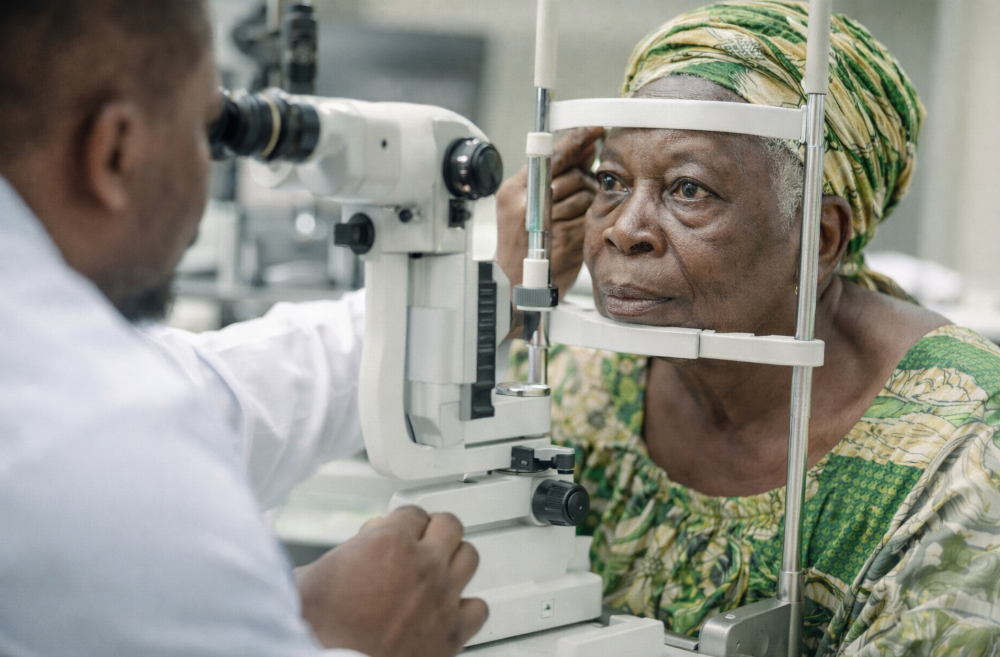
A new study, led by Professor Abdul-Kabir Mohammed of the Department of Optometry and Visual Science, College of Science, KNUST, has revealed that adults in Oforikrom Municipality have limited knowledge of age-related eye diseases, raising concerns about late presentation for timely diagnosis and treatment to to prevent avoidable visual impairments and blindness.
The study assessed awareness and understanding of common age-related eye conditions among adults aged 40 years and above, a demographic at increased risk of visual impairment.
Researchers surveyed 250 residents using a structured, interviewer-guided questionnaire to evaluate awareness, knowledge levels and sources of information on conditions including cataract, glaucoma, presbyopia and age-related macular degeneration (AMD).
The results published in the Journal of Science and Technology (JUST) showed that while awareness of cataract and glaucoma was relatively high, knowledge of these conditions remained low.
More than half of respondents demonstrated poor understanding of cataract, and over 80% showed limited knowledge of glaucoma. Awareness and knowledge of presbyopia and AMD were particularly low with only 7.2% of participants having heard of the conditions.
The researchers warn that poor knowledge of age-related eye diseases can affect early detection which is a key factor in preventing avoidable visual impairments and blindness.
In the study population, family members and friends were the most common sources of information on the age related eye conditions, followed by television programmes and interactions with healthcare professionals, highlighting gaps in formal health education and eye care outreach.
The analysis further found that higher educational attainment, religious affiliation and regular eye examinations were positively associated with greater awareness of certain eye conditions, suggesting that targeted community-based interventions could improve outcomes.
Ghana, like many low- and middle-income countries, faces a growing burden of vision impairment as life expectancy increases. Conditions such as cataract and glaucoma remain leading causes of avoidable blindness, particularly where routine eye screening and early intervention are limited.
The researchers argue that strengthening ocular health education within primary healthcare and community settings is critical to improving early detection and reducing long-term disability. They recommend intensified public awareness campaigns, routine screening for adults over 40 and greater involvement of eye care professionals in community education.
The study was conducted by a multidisciplinary team including Michael Kwesi Asante, Abdul-Sadik Ahmed, Bright Boakye, Felix Kofi Awuriki, Prince Mintah, Nana Yaa Koomson, Richchris Konadu Yiadom, Isabella Amoabeng, Stephanie Adjei and Ernest Kumi Dartey.
Story by: Edith Asravor