The Astronomy and Space Science Society, under the Department of Physics at the Kwame Nkrumah University of Science and Technology (KNUST), has secured a grant of 68,000 South African rand from the Hackathons for Development (Hack4dev) initiative to organise a regional data science hackathon focused on research skills development.
Hack4dev, launched in May 2022 by Professor Carolina Ödman, is a global initiative that uses hackathons to build data science capacity and address real-world research and development challenges. The programme was established in collaboration with international partners, including the Inter-University Institute for Data Intensive Astronomy (IDIA), the Office of Astronomy for Development (OAD), the BRICS Intelligent Telescope and Data Network (BITDN), DARA Big Data and the African Astronomical Society (AfAS).
Since its inception, Hack4dev has grown into an international programme linking institutions and researchers across multiple regions through coordinated hackathons.
The funding will support KNUST’s participation in the Hack4dev Data Science Hackathon Cascade Programme, which will be implemented in two stages. In the first stage, selected organisers will undergo training at an Organisers Hackathon scheduled to take place in Cape Town, South Africa, in May 2026. The second stage will involve the organisation of regional hackathons at host institutions, including KNUST, tentatively scheduled between August and October 2026.
Hackathons have increasingly emerged as effective tools for rapid skills development, innovation and collaborative problem-solving, particularly in response to fast-paced technological change. Through the programme, participants will receive hands-on training in data science and machine learning, with a focus on working with real astronomical datasets. The initiative aims to prepare participants for both academic research and professional careers in data-driven fields.
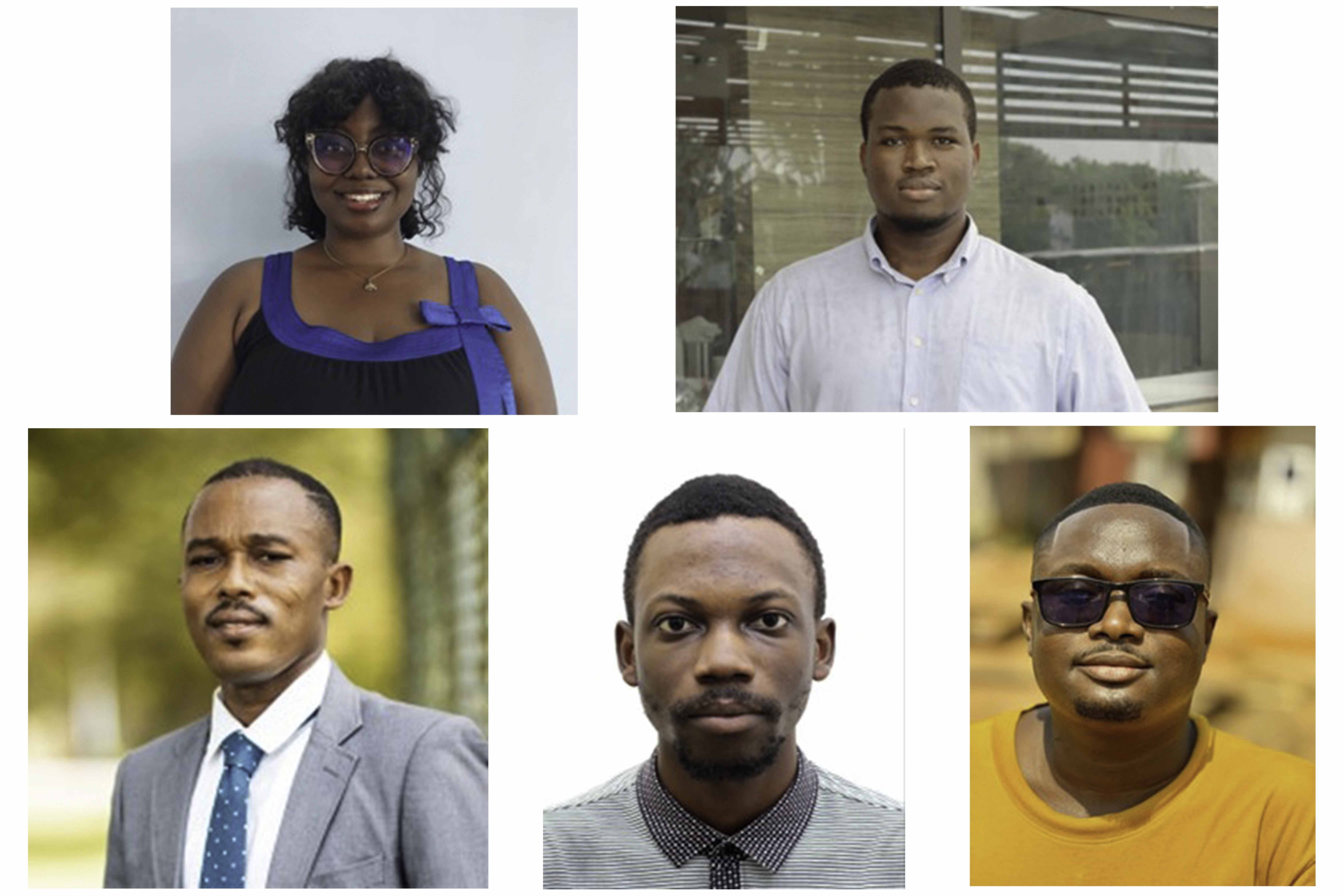
The KNUST project team comprises four students and one faculty member. The team is led by Collins Lartey, with Jemimah Enyonam Kwakuyi serving as project organiser and coordinator. Furgurson Dawuda Abubakari Awuni is the communications coordinator, Steven Yirenkyi serves as technical officer, and Dr. Linus Kweku Labik acts as institutional liaison.
Three of the student organisers are on track to become among the first locally trained astronomers in Ghana to obtain MPhil and PhD degrees in astronomy and astrophysics. The project also builds on recent institutional achievements, following Dr. Labik’s receipt of a Simons Foundation grant in 2025 to support astronomy-related research.
While hackathons are often associated with short-term innovation and prototyping, Hack4dev seeks to extend its impact by aligning challenges with real research problems and promoting sustained skills development. Through this initiative, KNUST continues to strengthen its role in data science education, astronomy research and international scientific collaboration.