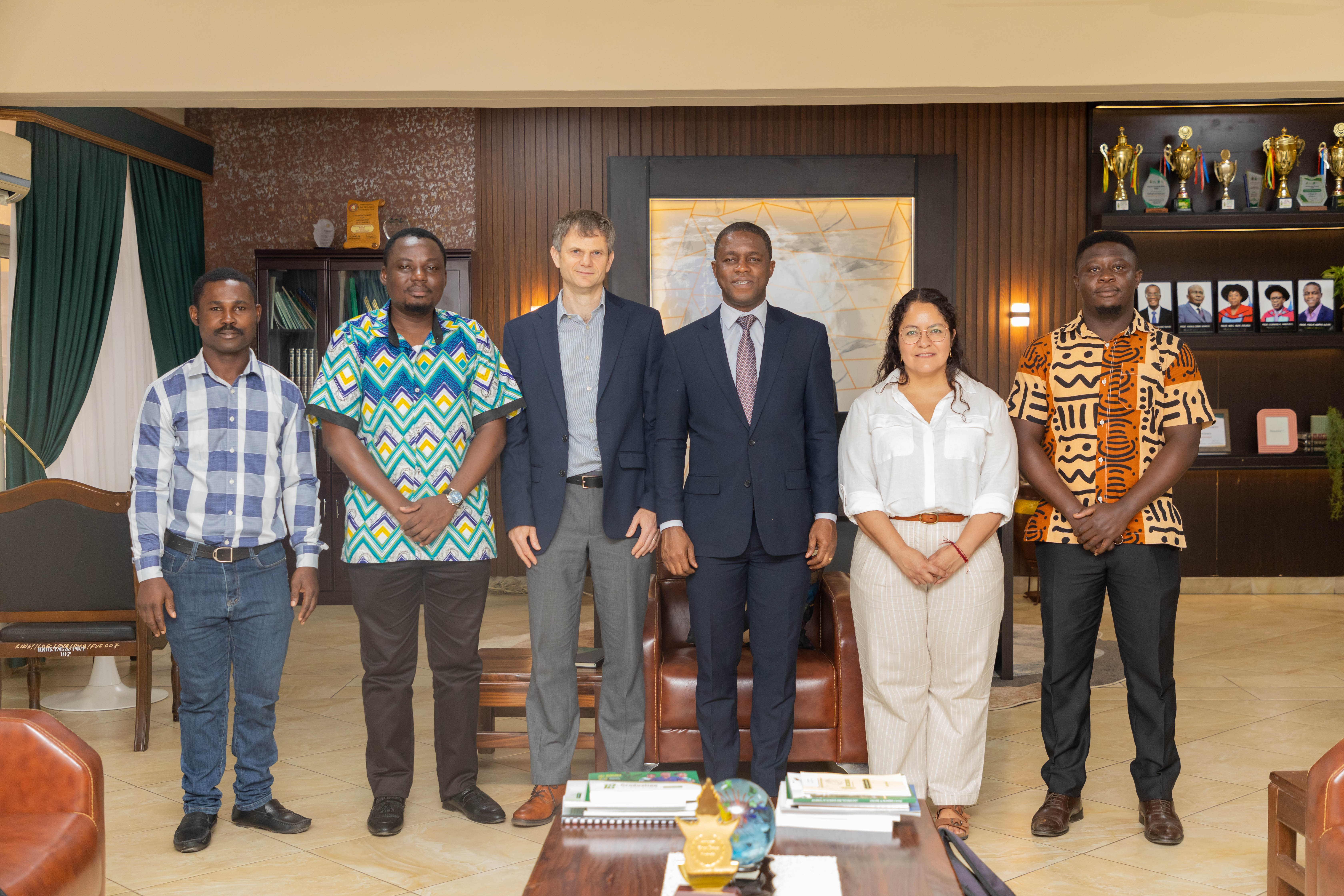
The College of Science has graduated a total of 206 graduands as part of the University's 59th Special Congregation, contributing to a total of 2,657 undergraduates honored across colleges.
Speaking on behalf of the Vice-Chancellor, Professor Christian Agyare addressed the graduating class, urging them to uphold values of responsibility and purpose.
“You are the embodiment of hope and the promise of innovation and change,” he said, urging graduates to see their achievement as a starting point for a life of impact, integrity and service.
He added that education should not be viewed solely as a means for personal gain, but as a way of bringing light and positive change into the lives of others.
Professor Agyare emphasized the university’s growing role in addressing national and global challenges through applied research and innovation. He noted that research continues to be central to KNUST’s mission, positioning the institution as a leading hub for practical solutions to development issues.
Highlighting recent breakthroughs, he pointed to a pioneering project by researchers from the Department of Food Science and Technology, who are developing chocolate using okra as a natural alternative ingredient.
This pioneering research redefines chocolate production by utilizing pectin, a natural compound extracted from okra, as a sustainable alternative to lecithin, a commonly imported industrial emulsifier.
Led by Prof. Jacob K. Agbenorhevi, the project has successfully produced and tested sample chocolates, with consumer trials reporting excellent acceptance particularly for milk chocolate varieties. The research is conducted under the Africa Agro-Food Knowledge Transfer Partnership (AAKTP), which links KNUST with local and international partners, supported by funding from Innovate UK.
By harnessing a locally abundant crop, the initiative reduces Ghana's dependence on imported emulsifiers, promotes sustainability, and strengthens academic-industrial collaboration.
Beyond the laboratory, the project positions Ghana not only as a cocoa powerhouse but as an emerging leader in food science innovation on the global stage.