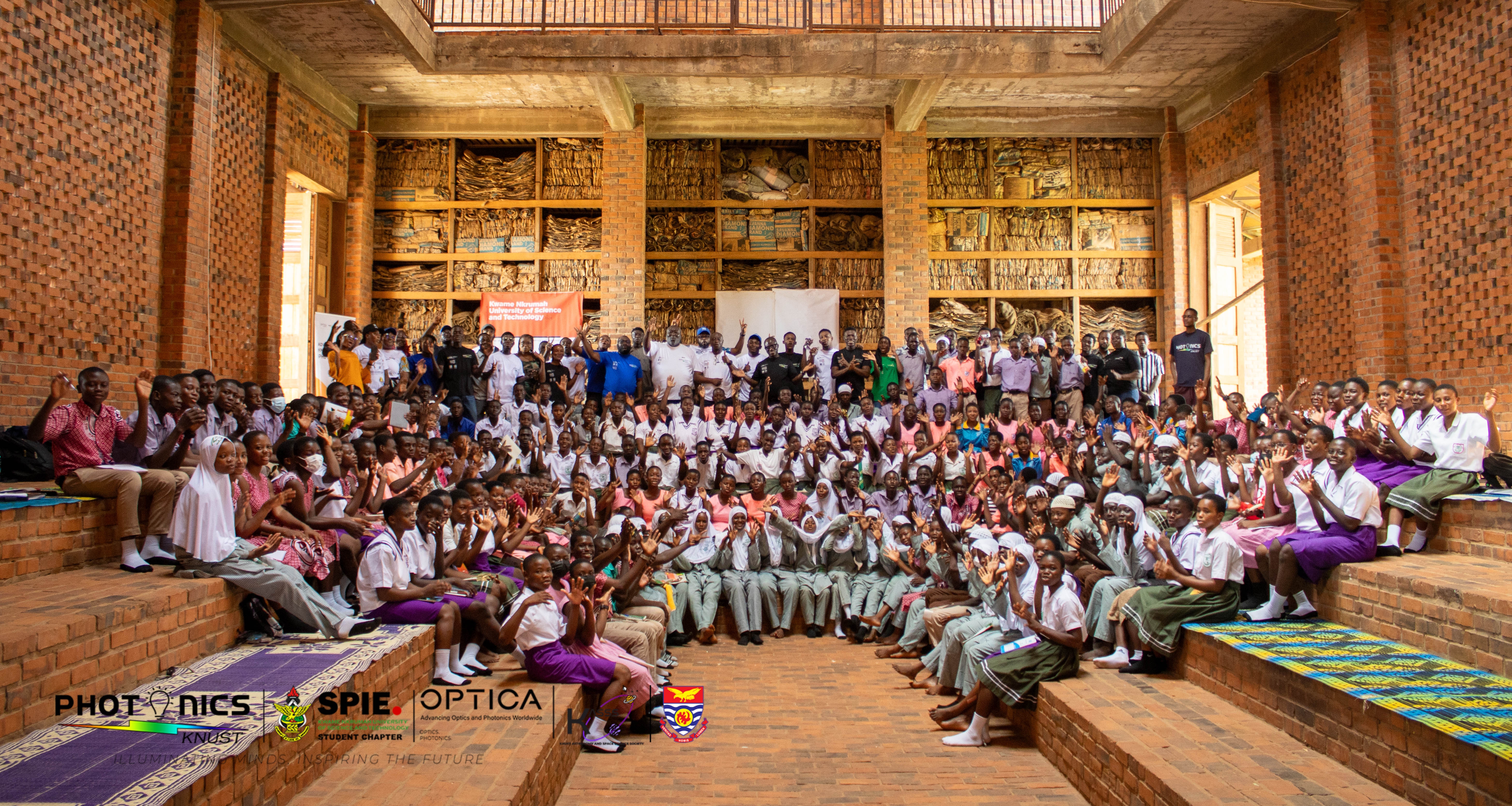
The Ghana Photonics and Optics Laboratory (GPOL), based in KNUST's Department of Physics and supported by SPIE and Optica, has marked the International Day of Light with Light Up Ghana 3.0, a two-day outreach in Tamale that brought more than 400 students into the world of optics, photonics, and astronomy.
The programme was organised in collaboration with the KNUST Photonics Student Chapter, the KNUST Astronomy and Space Science Society, the West African Geophysics Laboratory, and the Diagnostics and Visual Function Research Laboratory.
The two-day outreach, held at Red Clay Studios in Tamale, brought together over 400 Junior High School and Senior High School students from across the Northern Region for interactive sessions on optics, photonics, astronomy, physics, and other science-related fields.
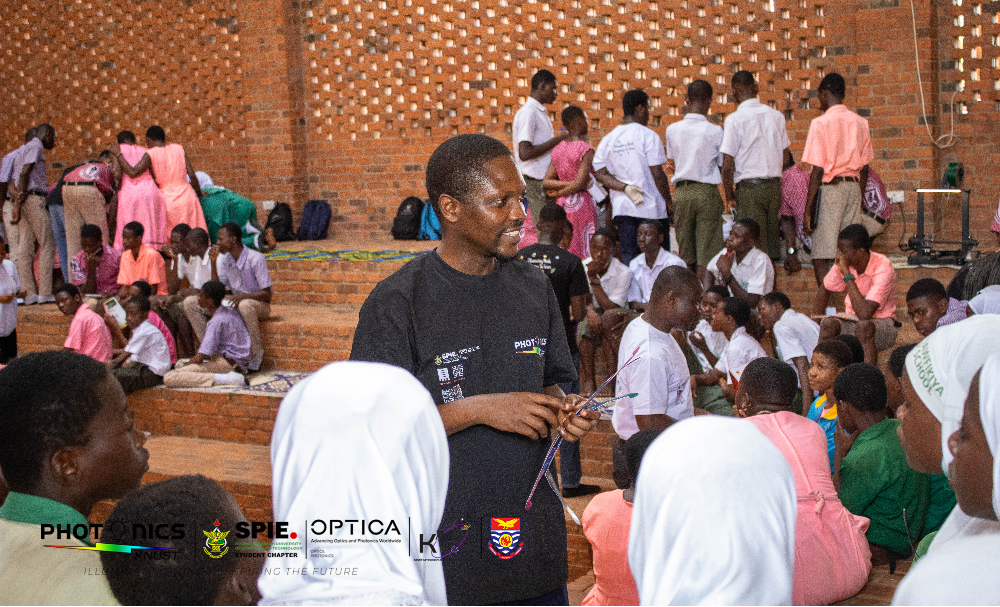
Students moved between hands-on demonstration stations, science communication sessions, and a free eye screening component delivered by the Diagnostics and Visual Function Research Laboratory.
The outreach was part of activities commemorating the International Day of Light, celebrated globally on May 16 each year by UNESCO. The day recognises the importance of light and light-based technologies in science, medicine, communication, education, energy, and sustainable development.
It also marks the anniversary of the first successful operation of the laser by physicist Theodore Maiman in 1960. This year's celebration focused on advancing innovation and impact through light-based science and technology, while encouraging young people to explore careers in STEM fields.
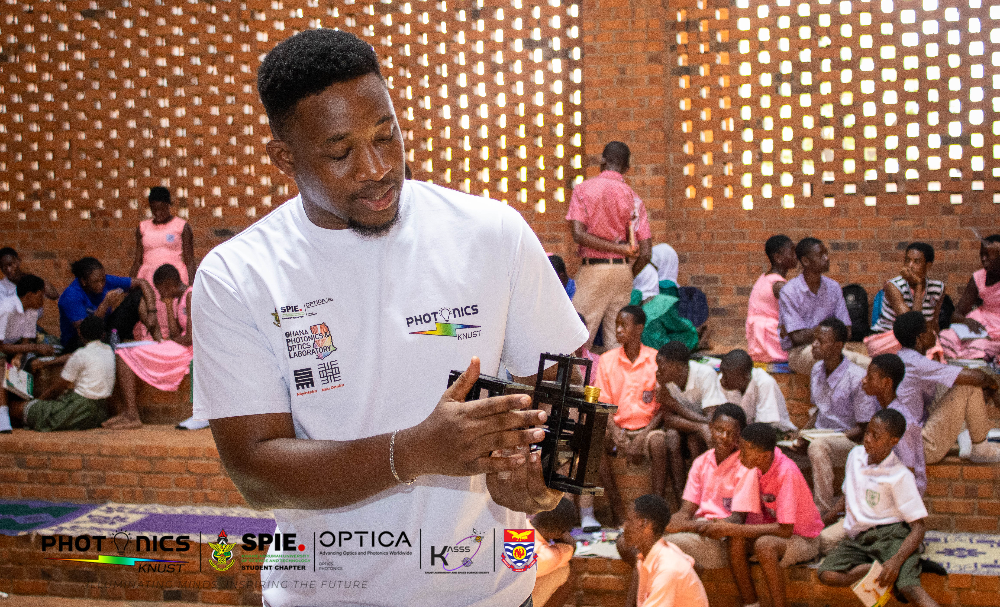
Reflecting on the outreach, the Principal Investigator of the project, Dr. Akyana Britwum, framed the initiative within a broader vision for Ghana's role in the global knowledge economy and the urgent need to widen the scientific horizons of young Ghanaians.
“Light-based technologies sit at the heart of every modern economy, from healthcare diagnostics to telecommunications to clean energy. If Ghana is to be a producer of these technologies, not only a consumer, we must begin investing in the curiosity of our young people now. Initiatives like Light Up Ghana are how we build that future: by showing students early that optics, photonics, and astronomy are fields they can lead in, here in Ghana and from Ghana out to the world,” he said.

Dr. Michael Edem Donkor, Co-Principal Investigator of the project, said the outreach was organised not only to celebrate the International Day of Light with the students but also to introduce them to the many academic and career opportunities available in light-based sciences.
He encouraged the students to explore fields such as optics, photonics, astronomy, space science, and geophysics as potential paths for their tertiary education.
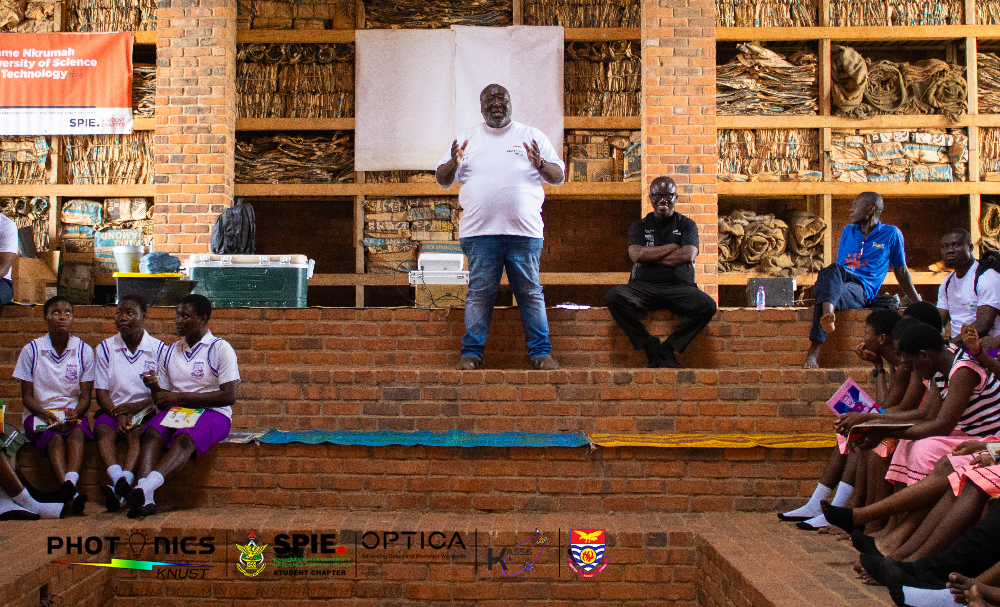
Prof. Francis Kofi Ampong, Head of the Department of Physics at KNUST, noted that it is the responsibility of scientists and educators to train and inspire the next generation of innovators and researchers.
According to him, science is often perceived as abstract and difficult, making it necessary for educators to simplify scientific concepts so that students can better understand and appreciate them. He expressed optimism that the outreach would encourage many of the participants to pursue science-related programmes at the tertiary level.
Professor Isaac Nkrumah highlighted the significance of physics in everyday life and its numerous applications in medicine and technology.
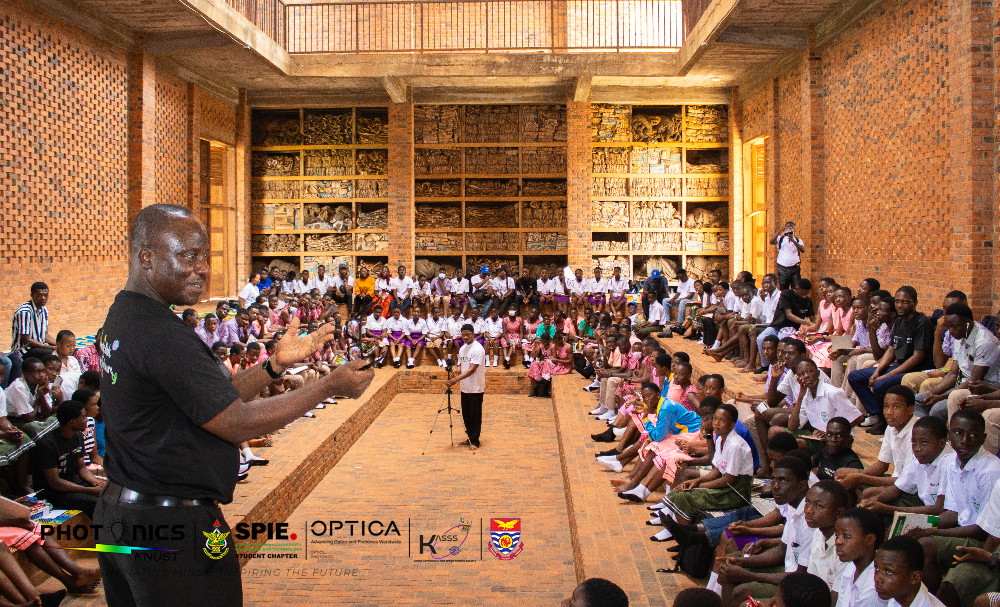
He explained that physics contributes immensely to medical advancements through technologies such as X-rays, MRI scans, ultrasound systems, radiation therapy for cancer treatment, laser surgeries, and optical imaging systems used in healthcare facilities around the world.
One of the student participants, Kadim Nadara of the Northern School of Business, described the programme as highly educational and inspiring.
“The outreach has made me understand many things that happen around me. This programme is very educational. It taught me things I did not know, and I feel lucky to be part of it. I have now developed an interest in studying physics, and I hope to come to KNUST one day to learn more,” he said.
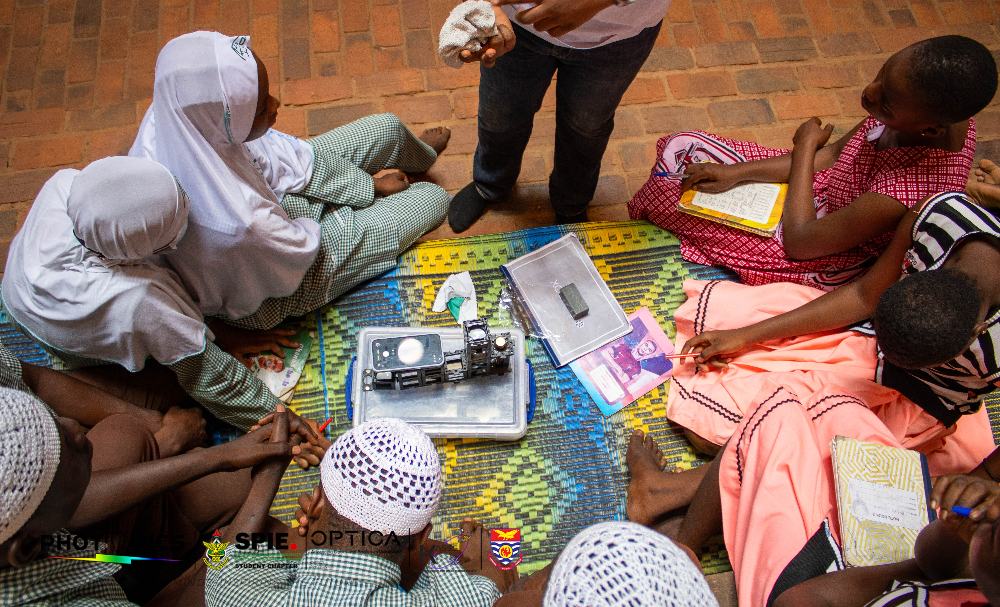
The outreach also featured interactive demonstrations, science communication sessions, and mentorship opportunities to help students appreciate the role of light-based technologies in solving real-world problems.
As the world continues to celebrate the International Day of Light, the organisers expressed their appreciation to SPIE, Optica, Red Clay Studios, the Department of Physics at KNUST, the KNUST Photonics Student Chapter, the KNUST Astronomy and Space Science Society, the West African Geophysics Laboratory, and the Diagnostics and Visual Function Research Laboratory for their support and partnership in inspiring the next generation of scientists and innovators in Ghana.