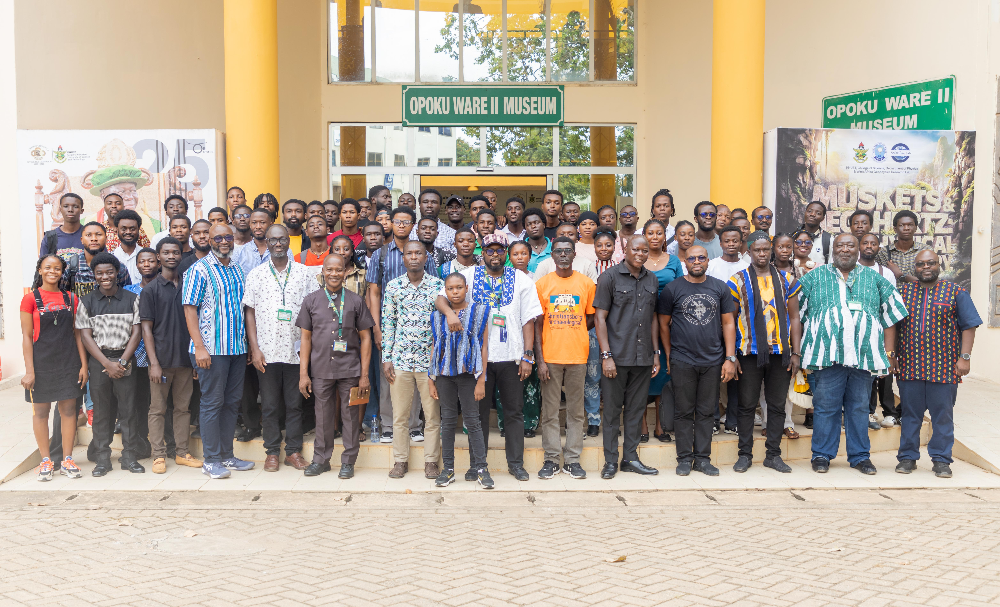
The Department of Physics and the West Africa Geophysics (WAGeo) Research Lab, in collaboration with the KNUST Museum, have launched “Musket & Megahertz: A Geophysical Detective Story”, an exhibition that follows the historic discovery of Ghana’s first musket balls at Fort Tantumquery in Otuam.
This exhibition is the culmination of a two-year research project funded by the German Ministry of Education and Research (BMBF) through UNESCO-TWAS.
Using drone technology, ground-penetrating radar, and electrical resistivity tomography, the research team uncovered the architectural remains of the 18th-century British Fort at Tantumquery, including the first-ever discovery of musket balls at a colonial archaeological site in Ghana.
The discovery represents a milestone in Ghanaian archaeological research and demonstrates how innovative geophysical methods can reveal hidden history efficiently and safely.
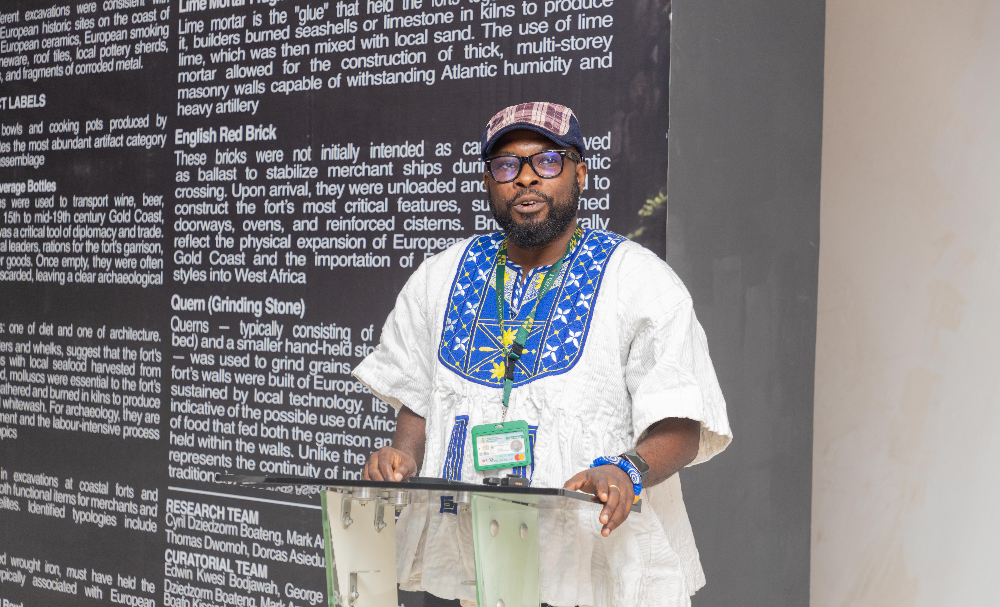
“This represents a major shift in how we investigate heritage sites in Ghana,” said Dr. Cyril Dziedzorm Boateng, Principal Investigator and Head of the West Africa Geophysics Lab at KNUST’s Department of Physics. “We have demonstrated that advanced geophysical technology can work effectively in our local soil conditions, allowing us to uncover history without disturbing the site unnecessarily.”
Fort Tantumquery was established in the 1720s by the Royal African Company as part of a network of coastal forts linked to trade and the transatlantic slave trade.
The recovered musket balls provide physical evidence of the fort’s military activity and are believed to be the first of their kind documented at any of Ghana’s colonial forts.
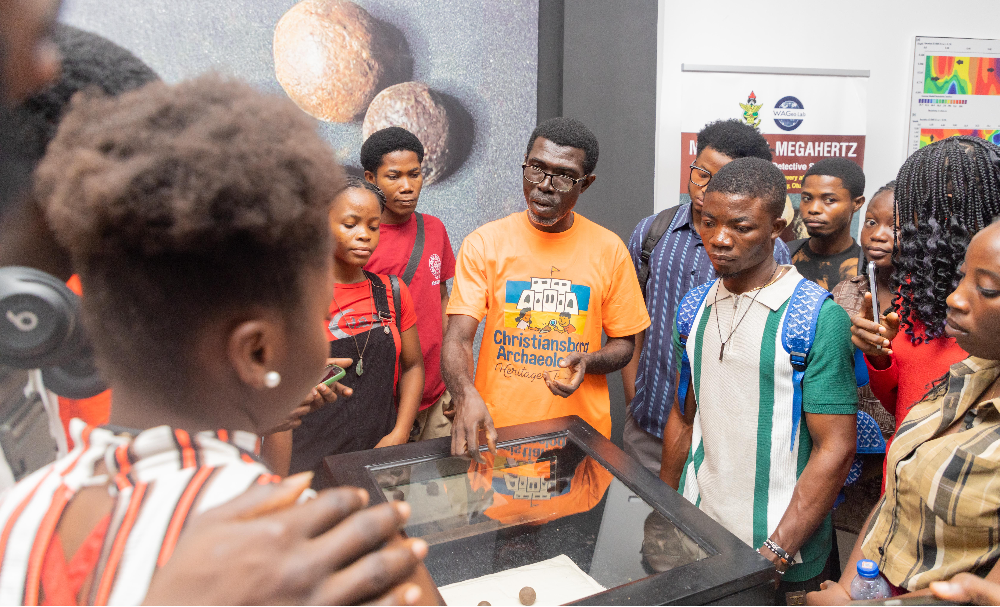
“Only a few of our coastal forts have been studied with modern scientific methods,” Dr. Boateng added. “This work shows how innovation can help us document heritage before it is lost to natural erosion or development.”
The project was funded through the SG-NAPI award supported by the German Ministry of Education and Research (BMBF) through UNESCO-TWAS.
It brought together KNUST’s Department of Physics, the University of Ghana’s Department of Archaeology and Heritage Studies, and the Ghana Museums and Monuments Board.
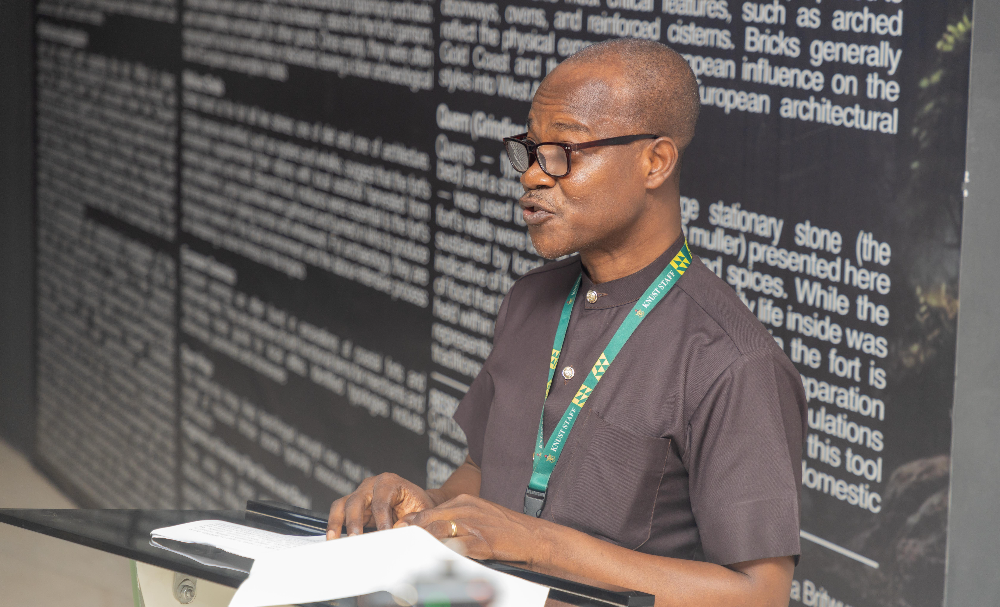
Professor Francis Kofi Ampong, Head of the Department of Physics, remarked, “When physics meets heritage studies, remarkable insights emerge. This project demonstrates the power of collaboration, innovation, and interdisciplinary research in shaping Ghana’s future while preserving its past.”
Speaking on behalf of the Pro-Vice Chancellor, Professor Samuel Asare-Nkansah, Dean of the Faculty of Pharmacy and Pharmaceutical Sciences, said, “This project demonstrates what is possible when institutions move beyond territorial thinking and commit to a shared purpose. It validates KNUST’s vision of combining science, heritage, and innovation to produce research with real impact.”

Professor Philip Antwi-Agyei, Provost of the College of Science, praised the interdisciplinary collaboration. “This project highlights the College’s commitment to combining scientific innovation with cultural heritage. It is a powerful example of how research can illuminate Ghana’s past while contributing to knowledge, skills development, and national pride,” he noted.
Dr. Samuel Nilirmi Nkumbaan, Head of the Department of Archaeology and Heritage Studies at the University of Ghana, emphasized the collaborative and public-facing nature of the project.
“By integrating geophysics with archaeology, we are creating new ways for students, researchers, and the public to explore Ghana’s history while preserving its cultural sites,” he said.
The project involved a collaborative team including Cyril Dziedzorm Boateng, Mark Amenyo-Xa, Kennedy Atsutse, Akyana Briwum, Thomas Dwomoh, Dorcas Asiedu, Alhassan Mutalabi, and Gideon Agyare. Their work sets a new benchmark for heritage research in West Africa, showcasing how science and culture can converge to create meaningful impact.
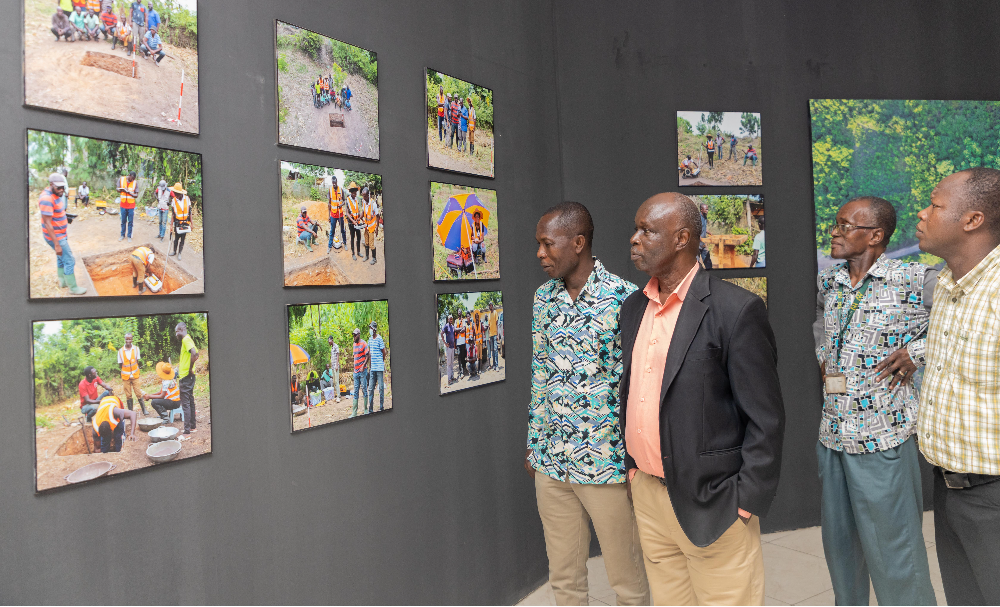
The findings are being showcased in an exhibition titled “Muskets and Megahertz: A Geophysical Detective Story” at the KNUST Museum (Opoku Ware II Museum).
The exhibition, which opened on February 26 and runs until March 31, features musket balls, photographs of recovered artefacts, and explanations of the technology used. Admission is free.