The Department of Physics in collaboration with Promoting Radio Astronomy in Ghana through Schools and Clubs (PRAGSAC), is hosting a four-day Basic Astronomy and Space Science Teachers’ Training Programme for basic school teachers.
The workshop, aims to strengthen teachers’ capacity to deliver astronomy and space science education in line with Ghana’s new basic school curriculum, with emphasis on inclusive teaching practices and hands-on learning using low-cost, locally available materials.
Welcoming participants, the Head of the Department of Physics, Prof. Francis Kofi Frimpong, said the programme reflects KNUST’s commitment to strengthening science education from the foundational level.
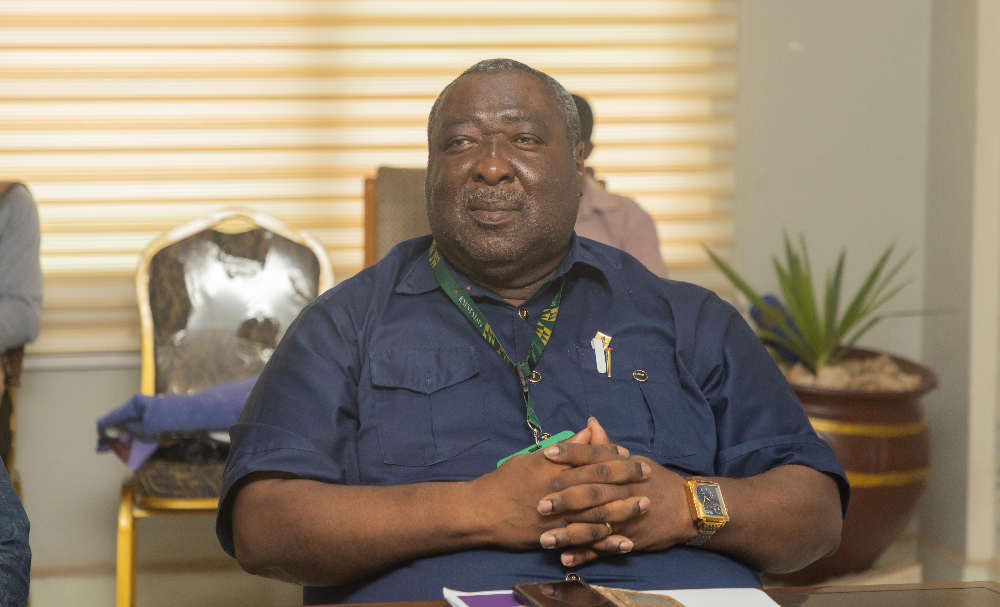
“Astronomy is often perceived as distant, but it plays a critical role in modern society, driving innovation in communication systems, navigation, imaging technologies, data science and engineering,” he said. “By investing in astronomy education, we are investing in problem-solving skills and technological advancement. This effort must begin in our junior high school classrooms, where teachers lay the foundation for future scientists.”
Prof. Frimpong noted that KNUST has expanded astronomy within its academic structure, from undergraduate teaching to postgraduate research, adding that the training programme was timely and strategic in supporting teachers to translate scientific concepts into classroom practice.
Speaking at the opening session, Dr. Kelly Blumenthal, Director of the IAU Office for Astronomy Outreach, commended the organisers for building local capacity in astronomy education.
“This is important work, not only because it spreads knowledge of astronomy, but because it builds the capacity within communities to do that more effectively and sustainably,” she said, urging that similar initiatives be replicated across other regions.
Also addressing participants, Dr. Tshiamiso Makwela of the IAU Office of Astronomy for Education highlighted the persistent challenges facing astronomy education in schools, including limited curriculum content and teaching resources.
“This training programme is important because it addresses not just content, but also resources and pedagogy,” he said. “It equips teachers with the skills and support needed to take astronomy back into their classrooms and to see it as part of broader STEM education.”
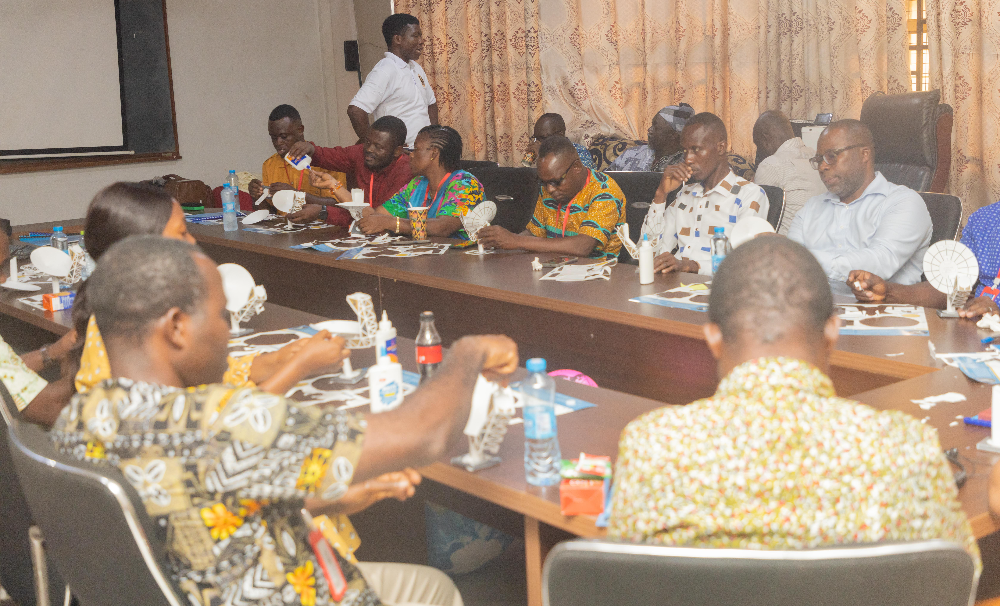
Mr. Albert Forson, of the Promoting Radio Astronomy in Ghana through Schools and Clubs (PRAGSAC), said the training programme was designed to bridge gaps in astronomy education at the basic school level by equipping teachers with practical skills and accessible teaching tools.
He noted that PRAGSAC’s collaboration with the Department of Physics, KNUST, aligns with its mission to nurture early interest in science through school outreach and astronomy clubs.
“Our focus is to make astronomy real and accessible for teachers and pupils alike,” Forson said. “By empowering teachers with hands-on, low-cost approaches to teaching space science, we are helping to spark curiosity, strengthen STEM education, and build a foundation for the next generation of scientists and researchers in Ghana.”
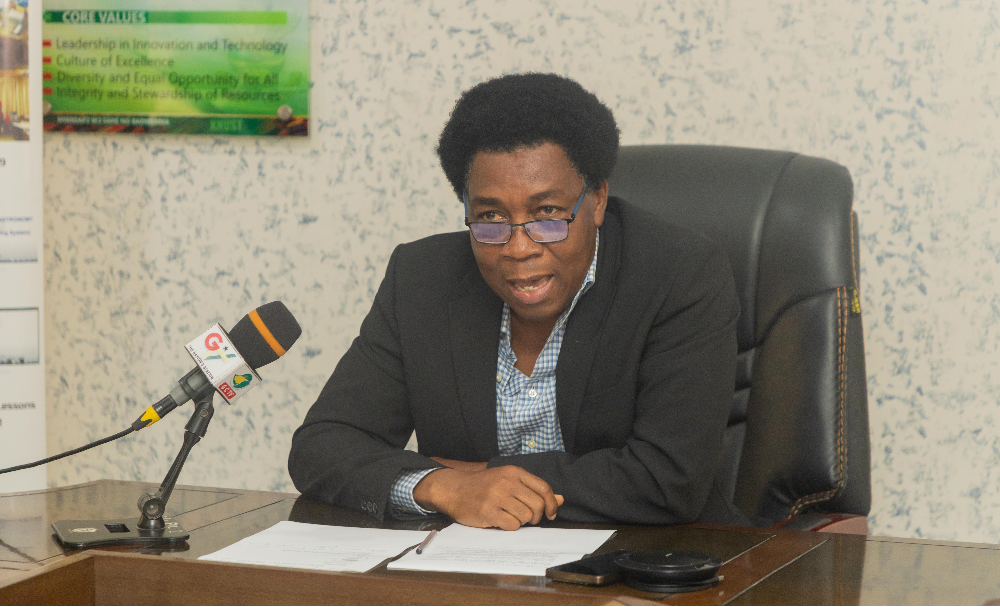
Dean of the Faculty of Physical and Computational Sciences, Prof. Joseph Abeiku Ackora-Prah, described the training as an investment in Ghana’s future, stressing the role of teachers in inspiring curiosity and lifelong interest in science.
“One lesson, one explanation, one moment of wonder can spark a lifelong passion,” he said. “Astronomy helps students see that science is not distant or unreachable, but something they can belong to.”
Providing the perspective of national space development, a representative of the Ghana Space Science and Technology Institute (GSSTI) noted that Ghana is positioning itself to benefit from the growing global space economy by investing in education, skills development and partnerships.
The four-day workshop is funded by the International Astronomical Union (IAU) - Office of Astronomy for Education (OAE) and the Department of Physics, KNUST