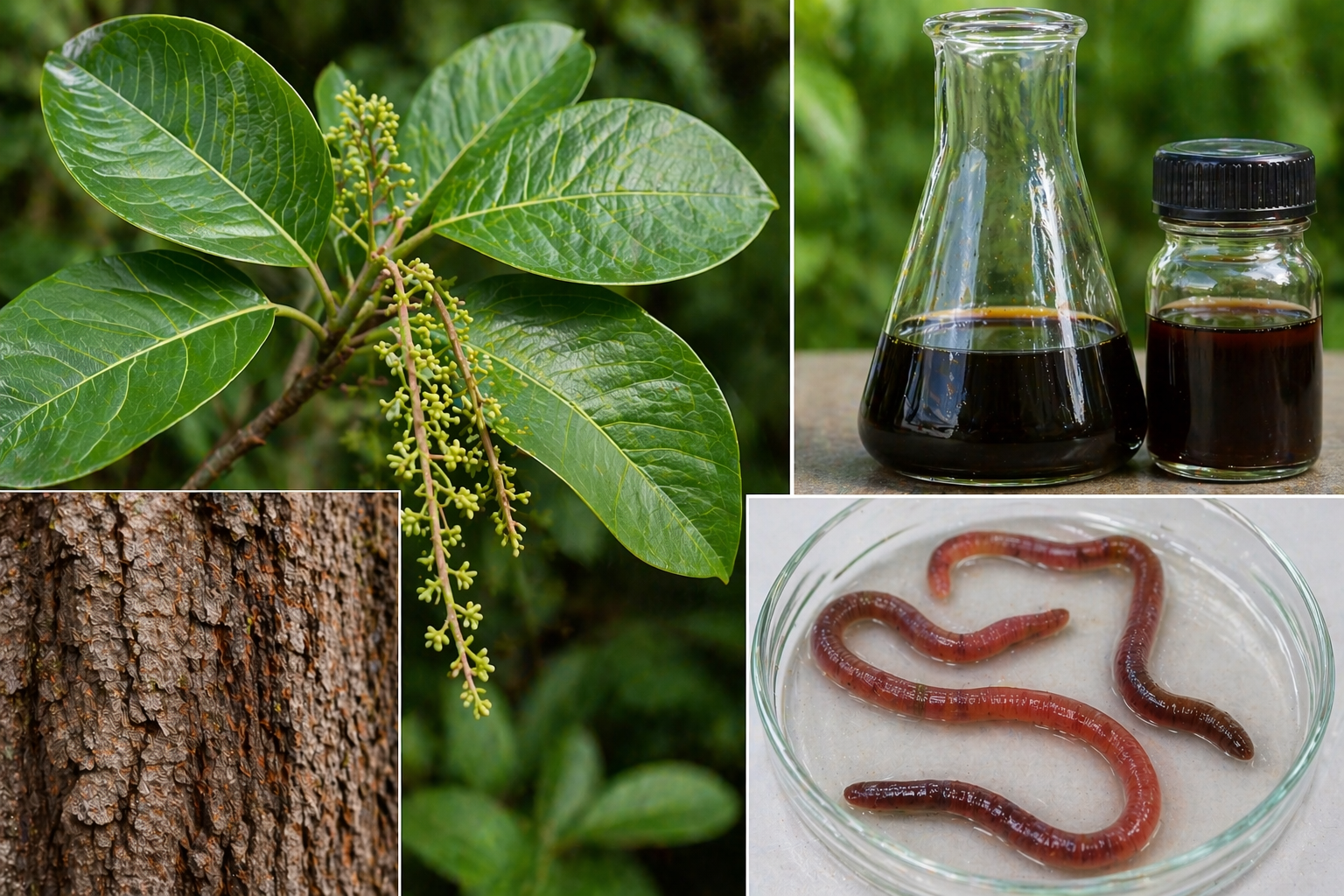
Scientists at the Department of Chemistry, College of Science, KNUST have identified a potential breakthrough in the fight against worm infections, as resistance to existing drugs continues to rise globally.
The study, conducted by Kwadwo Owusu, Stephenson Obeng Owusu, Jehoshaphat Oppong Mensah, Michael Konney Laryea and Lawrence Sheringham Borquaye, explored the medicinal properties of Croton penduliflorus, a plant widely used in traditional Ghanaian healing.
Their findings published in the journal Discover Chemistry reveal that extracts from the plant’s stem bark can effectively paralyse and kill worms within minutes, offering hope for new treatments.
Worm infections, also known as helminthiasis, remain a major health concern in many developing regions, including parts of Africa, where poor sanitation increases the risk of infection. These parasites can cause malnutrition, stunted growth, and other serious health complications, particularly in children.
According to the researchers, laboratory tests showed that the plant extract caused paralysis in worms in about eight minutes and death in approximately 15 minutes at high concentrations, demonstrating strong and rapid activity.
Further analysis revealed that the plant contains several natural compounds that work together to attack the worms. These compounds damage the worms’ outer structure, interfere with their movement, and disrupt vital internal processes.
Unlike many conventional drugs that target a single pathway, the plant’s multiple active components appear to act in combination, making it more difficult for worms to develop resistance.
The researchers also used computer-based simulations to study how the compounds interact with parasite proteins. While the interaction was moderate, the results suggest that the plant’s effectiveness comes from a combination of different biological effects rather than a single mechanism.
The study supports the long-standing use of Croton penduliflorus in traditional medicine and highlights its potential as a source of new, safer, and more effective anti-worm treatments.
The team is calling for further research to refine the extract, isolate key compounds, and explore its use in modern medicine.
Story by: Edith Asravor