As the world observes World Glaucoma Week, researchers at the College of Science, KNUST are calling for targeted education and screening programmes for people at higher risk of the disease, particularly relatives of glaucoma patients.
The recommendation follows a study by researchers from the Department of Optometry and Visual Science which found that knowledge of glaucoma and screening rates remain low among first-degree relatives of glaucoma patients in Ghana, despite their significantly higher risk of developing the disease.
The research, published in the Journal of Science and Technology, examined glaucoma awareness, knowledge and eye-care seeking behaviour among 306 first-degree relatives of glaucoma patients attending the Accra Regional Hospital Eye Unit.
Glaucoma is the leading cause of irreversible blindness worldwide, and early detection and treatment are critical to preventing permanent vision loss. People with a family history of the disease face a much higher risk of developing glaucoma compared with the general population.
Although the study found that about 60.8% of respondents had heard of glaucoma, the majority demonstrated limited understanding of the disease. More than two-thirds of participants could not identify glaucoma risk factors, while many were unaware that the disease can progress without symptoms in its early stages.
The research team, led by Tchiakpe P. M., Kwateng F., Quainoo E. J., Abdul-Kabir M., Osei-Duah I. and Acheampong H. O, also found that only 10.5% of respondents knew that vision loss caused by glaucoma is irreversible, highlighting a significant gap in knowledge even among individuals closely related to glaucoma patients.
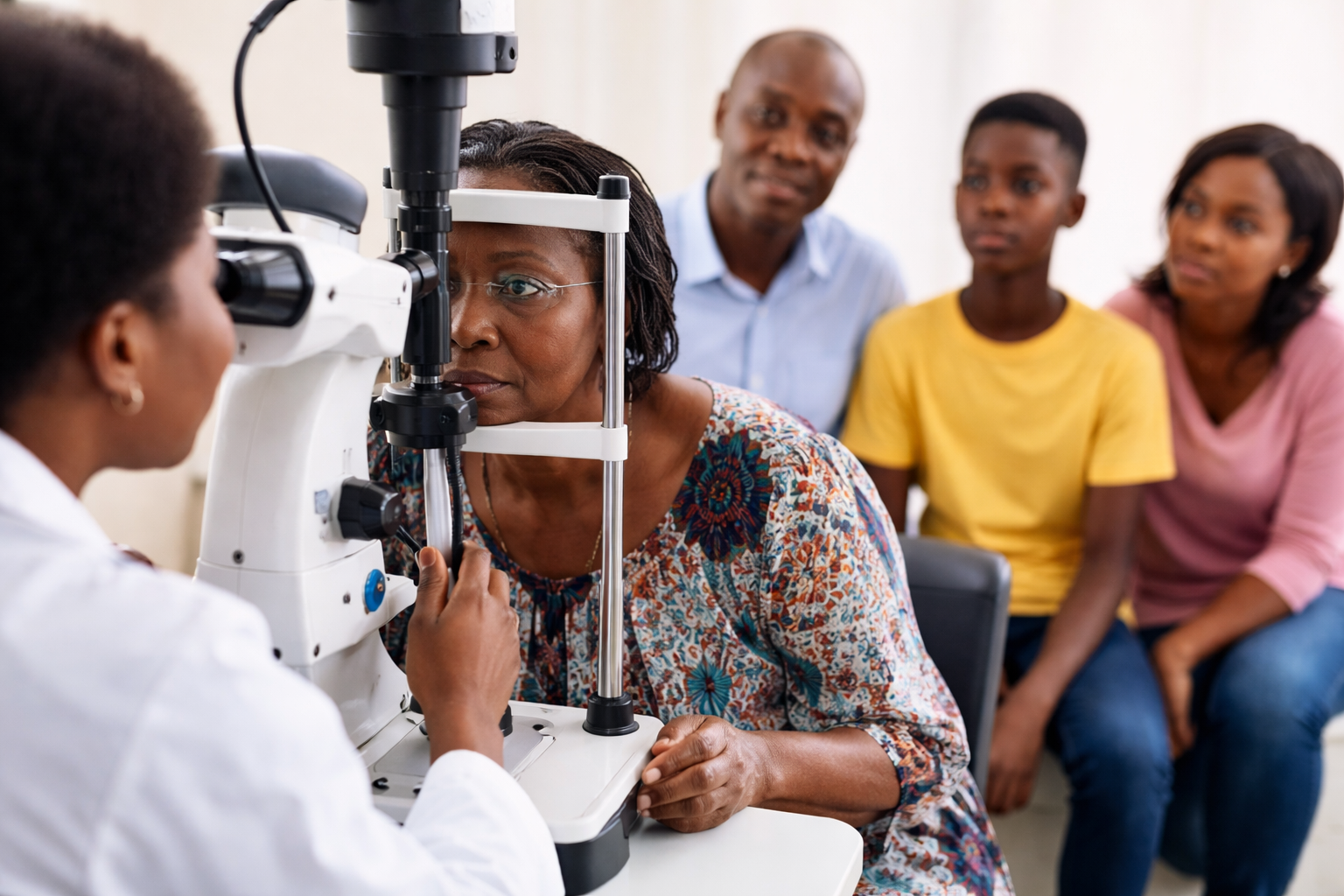
Screening rates among respondents were also low. The study revealed that only 23.2% had ever undergone glaucoma screening, despite the increased risk associated with family history.
Importantly, individuals who had been specifically informed to screen for glaucoma were far more likely to undergo testing, underscoring the importance of targeted health communication and preventive eye-care education.
The study further found that education level and occupation influenced awareness and knowledge of glaucoma, with individuals who had higher education and white-collar jobs more likely to be informed about the disease.
Social media emerged as the main source of glaucoma awareness and information, suggesting that digital platforms could serve as effective channels for public health messaging. However, the researchers noted that information circulating online may not always be accurate or comprehensive enough to improve understanding.
Considering these findings, the researchers recommend that eye-care professionals intensify education efforts among relatives of glaucoma patients, who are known to be at higher risk of developing the disease.
They also call on the Ghana Health Service and eye-care professionals to organize targeted glaucoma screening programmes to promote early detection and treatment.
The researchers further encourage the publication of accurate and comprehensive eye-health information on social media, where many people first encounter information about the disease.
With glaucoma often developing silently and without early warning signs, the researchers stress that early screening remains the most effective way to detect the disease and prevent irreversible vision loss.
By: Edith Asravor