Students at the College of Science have been encouraged to embrace purpose, critical thinking and community engagement as tools for personal development and societal transformation.
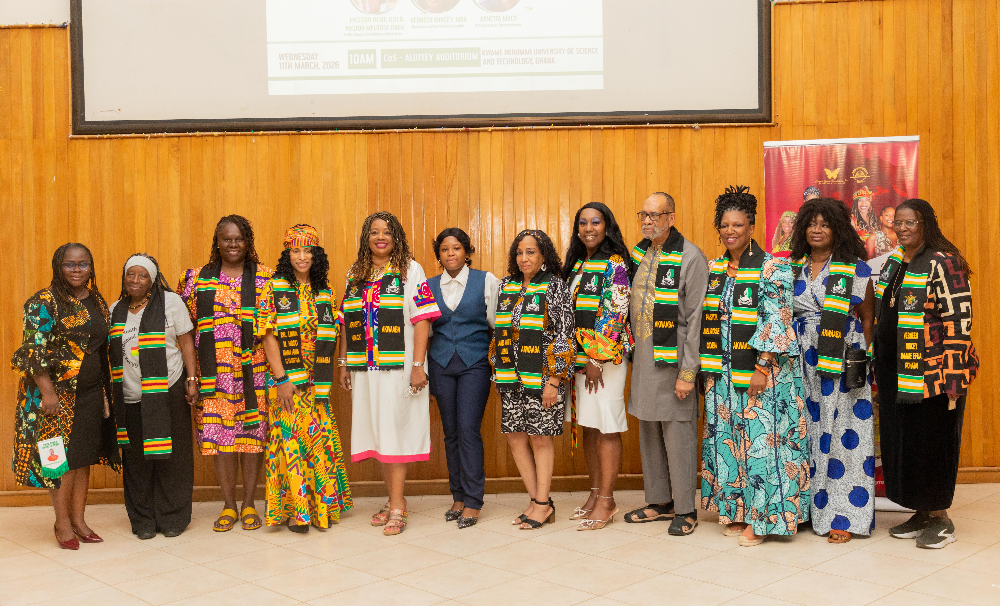
The call was made during the “Educate to Elevate ’26” programme, where educators, authors, entrepreneurs and community leaders engaged students on the importance of purposeful education.
The event was organized by the Biological Sciences Students’ Association (BIOSSA) in collaboration with the Purpose Youth Foundation and Upright Vision Concept.
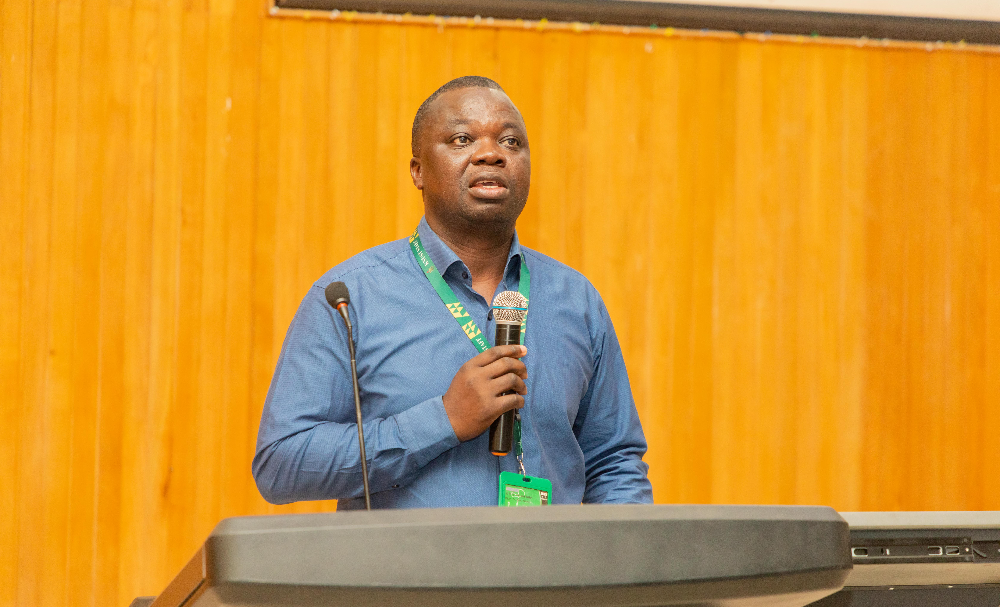
Professor Alexander Kofi Anning, Head of the Department of Theoretical and Applied Biology, said critical thinking is among the most important skills required in today’s job market. He urged students to take advantage of the opportunity to interact with the visiting speakers and ask questions that could broaden their perspectives.
He also welcomed the visiting team of educators and ministers from the United States, describing the programme as an important platform for students to strengthen their critical thinking skills.
Opening the session, Founder of the Purpose Youth Foundation, Lorie James, urged students to discover and pursue their purpose, describing it as the compass that guides life decisions.
“Critical thinking is more than analyzing information for exams,” she said. “It is the ability to question assumptions and ask yourself what impact you are meant to make.”
According to her, individuals who think critically often become agents of change because they refuse to accept easy answers and instead use their education to solve real-world problems.
Speaking on academic productivity and student wellbeing, Professor Aurelia Linda Ofori, highlighted strategies for achieving academic excellence without burnout.
She introduced what she described as the “three Rs of prevention” relax, reflect and regroup explaining that intentional rest helps lower stress, while regular reflection enables students to assess their workload and emotional wellbeing.
“Productivity is about progress, not perfection,” she said, urging students to set realistic goals and adopt smart time management practices.
She also challenged the culture of excessive multitasking, encouraging students to focus on monotasking, or completing one task at a time, to improve the quality of their work.
Founder of COINPM, Iris L. S. Jones, also emphasized the power of curiosity and inquiry, describing questions as catalysts for progress.
“A dangerous mind is not the one that knows many answers, but the one that asks many questions,” she noted.
She explained that asking clarifying, challenging and transformational questions can unlock new ideas, challenge outdated systems and inspire social change.
Author and publisher Deborah C. D. Simmons reminded students that critical thinking extends beyond academics and is deeply connected to culture, identity and problem-solving.
Drawing on the African proverb about the baobab tree, she said wisdom cannot be held by one individual alone but must be shared within communities.
“Honour where you come from, respect tradition, and ask questions deeply enough to shape your future,” she advised.
In her presentation, author and publisher Elena M. Neely highlighted the relationship between creativity and critical thinking, stating that innovation begins with curiosity.
“Every idea starts with a question,” she said, encouraging students to think freely and create boldly as they prepare for the future.
Entrepreneur and commissioner Arnetta Mack urged students to intentionally build and engage with communities that support growth.
“Community is not just where you are, but what you intentionally build around you,” she said, adding that individuals belong to multiple communities social, academic, professional and faith based.
She encouraged students to think critically about the spaces they occupy and focus not only on what they gain from communities but also on what they contribute.
Faith leaders Rene Ode and Melrose Oden of In His Image and Likeness Ministries also encouraged students to combine faith with critical thinking.
They noted that questioning assumptions and reflecting deeply on issues can help young people resist misinformation and develop the confidence to address Africa’s challenges.
“You are the answers to many of the problems the continent faces,” they told participants.