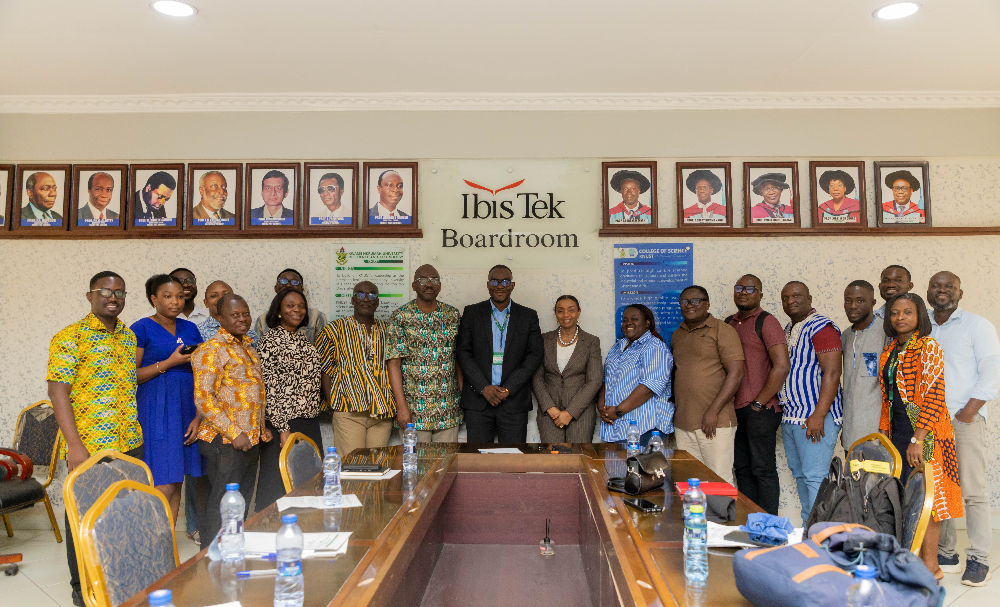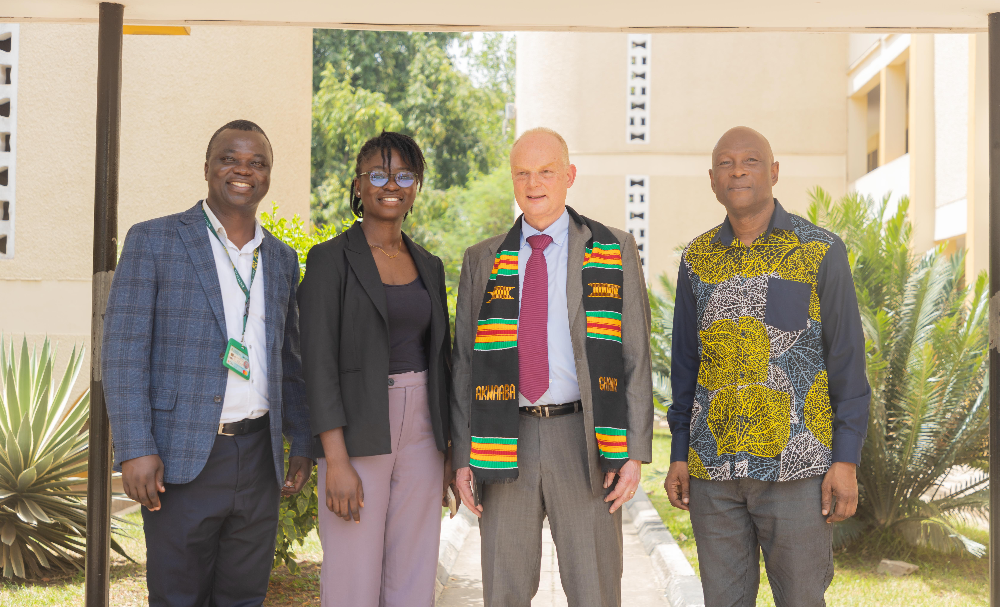
The Department of Theoretical and Applied Biology at the College of Science is hosting internationally recognised parasitologist Adrian Streit during his visit to Ghana to serve on a doctoral viva panel.
Prof. Streit, together with Prof. John Aseidu Larbi, is part of the supervisory team for Miss Sandra Gyateng Mensah’s PhD research and is participating in her thesis defence as an external examiner
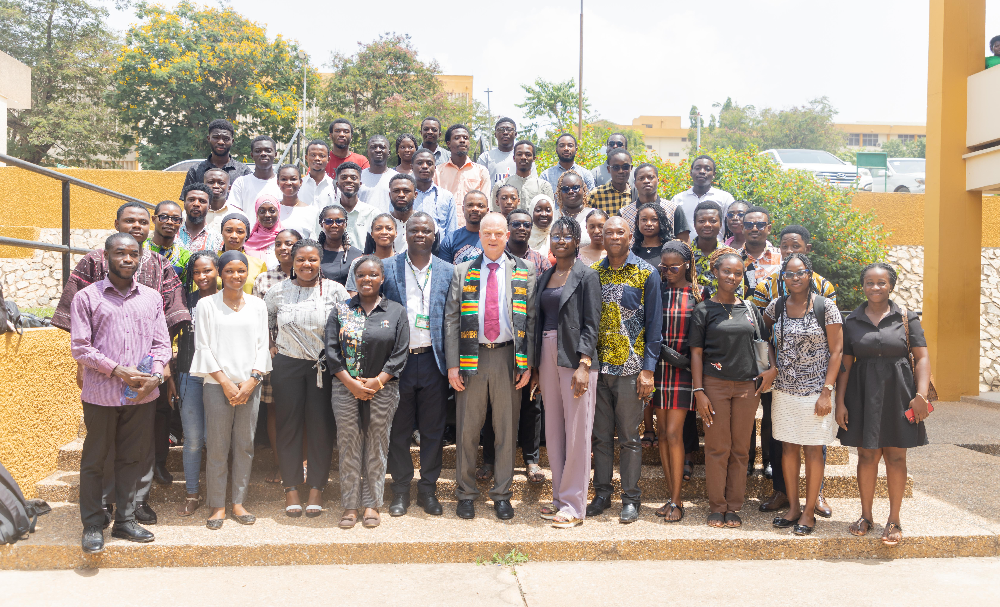
Aside from the viva, he met with faculty and students for a mini-seminar, where he spoke about his research on parasitic worms that infect both animals and humans, and what they mean for public health around the world.

During his seminar, Prof. Streit drew attention to Strongyloides stercoralis, a tiny intestinal worm that infects hundreds of millions of people globally.
According to the World Health Organization, about 600 million people roughly 8.2 percent of the world’s population are infected. Many people do not show symptoms, which makes the infection easy to overlook.
However, in people with weak immune systems, the infection can become severe and even life-threatening. One reason is that the worm can reproduce inside the body, allowing the infection to last for many years if it is not treated.
The disease can be treated with medication, especially when detected early. But Prof. Streit noted that diagnosis remains a challenge, and many health professionals are still unfamiliar with the infection.
Another issue discussed was whether the infection can spread from animals to humans.
Studies show that dogs can carry the same types of worms found in humans. This suggests that dogs might play a role in spreading the infection in some areas. However, confirmed cases of direct transmission from dogs to humans are rare.
Prof. Streit explained that the risk likely depends on local conditions and varies from one country or community to another.
Students and faculty engaged Prof. Streit in discussions about how the infection spreads, how long it can remain in the body, and what can be done to improve detection and control.