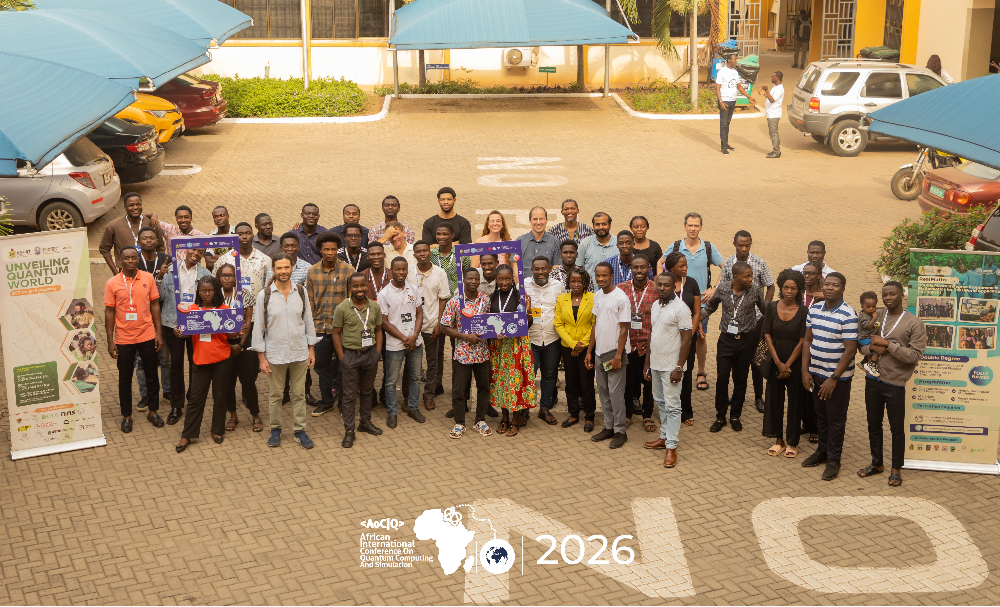
As part of the African International Conference on Quantum Computing and Simulation (<AoC|Q>) , student participants underwent a week-long intensive training designed to move beyond theory and immerse them in the practical foundations of quantum science.
For many of the students, the experience was transformative.
Favour Alfred, a participant from Ladoke Akintola University of Technology (LAUTECH), Nigeria, described the programme as more than just an academic gathering.
“It was more than a conference,” He said. “It was like a training ground for us, a training ground to become better quantum computing scientists and to grow into professionals who can stand on our own.”
He noted that what stood out most was the level of engagement.
“We were not just taught; they ensured that we understood what we were being taught. I believe Africa is moving towards a better place in quantum science, and we could actually be at the frontiers of quantum computing.”
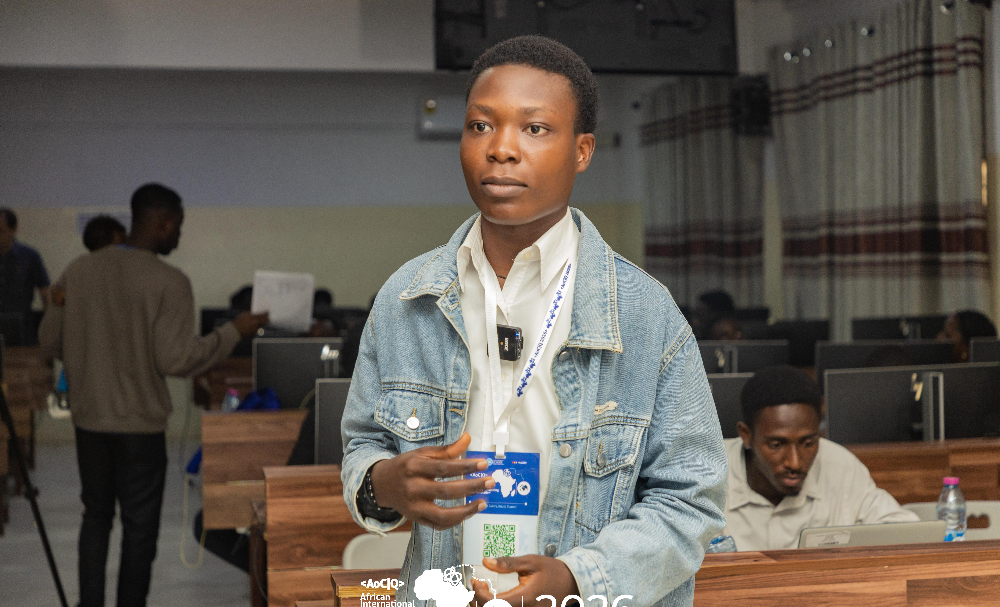
Justin Dometi Etse Kwasi, an engineering student from the University of Cape Coast, said the training helped him connect theory to real-world applications.
“It’s important for young professionals like us to understand both the theoretical and experimental sides of the field so we can focus on what is real and where we can contribute.”
He added that initiatives like this should be expanded to reach more students across the continent.
Henry Nyarko, also from the University of Cape Coast and studying engineering physics, said the programme broadened his academic outlook.
“I’ve come to understand that I can apply abstract quantum theory using tools like MATLAB and machine learning to train models in ways we previously thought were only possible classically,” he said. “My place in quantum simulation and computing has really broadened.”
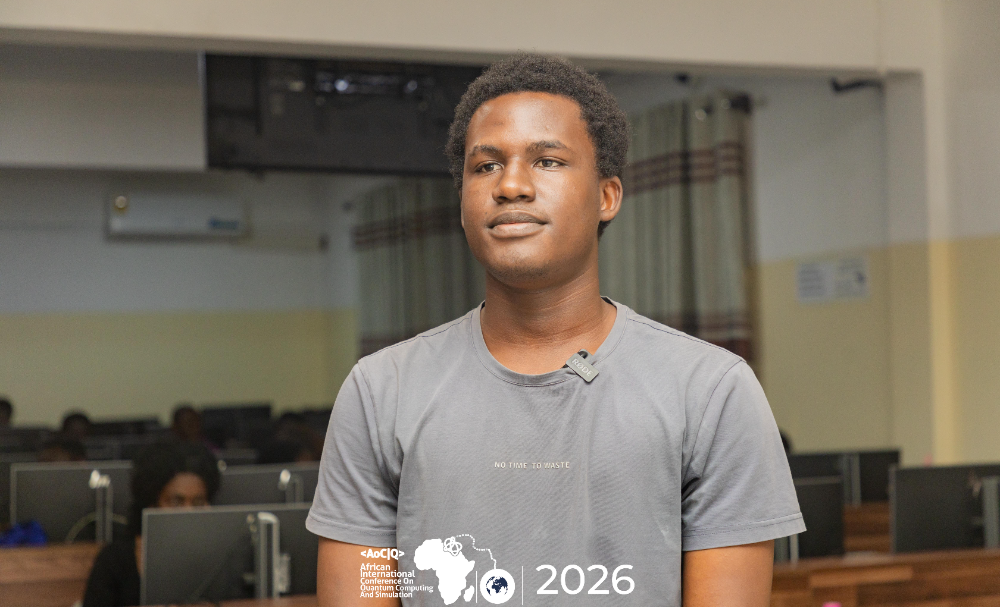
The training brought together students from diverse backgrounds; mathematics, engineering, physics and even biology creating what facilitators described as a “heterogeneous” learning environment.
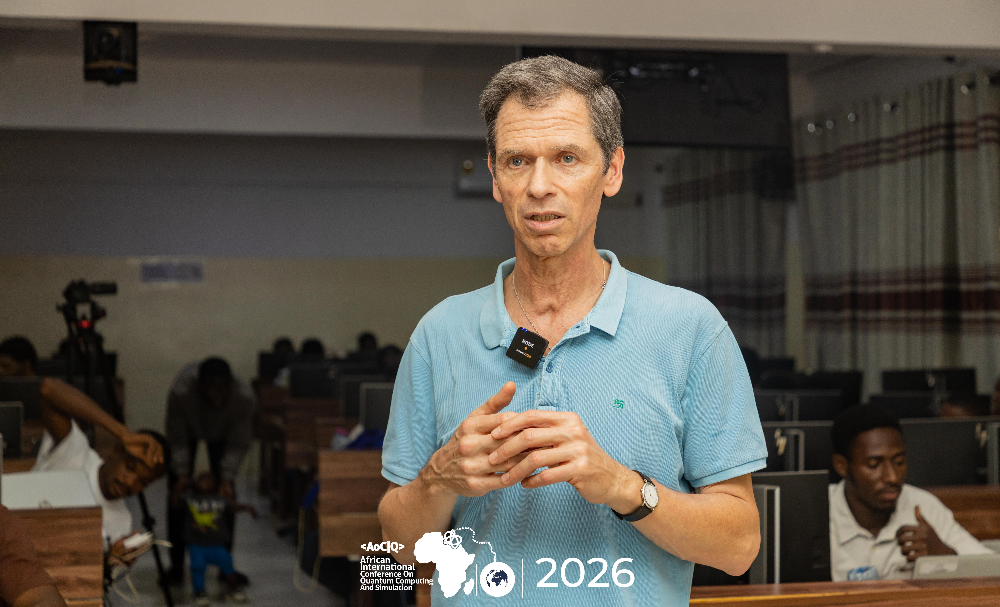
Professor Andreas Buchleitner of the University of Freiburg’s Institute of Theoretical Physics, one of the facilitators, acknowledged the challenges and opportunities that came with such diversity.
“The group was very heterogeneous, but the crucial thing is breaking the ice so that students speak up and engage. Once that happens, real learning begins.”
He noted that while one week is relatively short for a subject as dense as quantum science, sparking curiosity was a key objective.
“If some of the material struck a resonance and made them curious to learn more if they take away one or two well-understood pieces of knowledge then we have achieved something,” he said.
Professor Buchleitner emphasised that advancing quantum science in Africa, as anywhere else, depends largely on the commitment of the younger generation.
“Advancing quantum science and technology hinges on the commitment of young people. What we can do is seed curiosity. It may start as a drop, but a drop can eventually become a river.”
The conference reflects a growing commitment to capacity building in emerging scientific fields across Africa. As quantum computing continues to shape conversations in finance, cryptography, materials science and artificial intelligence, the conference’s student-centred approach signals a deliberate effort to position Africa not just as a participant, but as a contributor to the global quantum ecosystem.