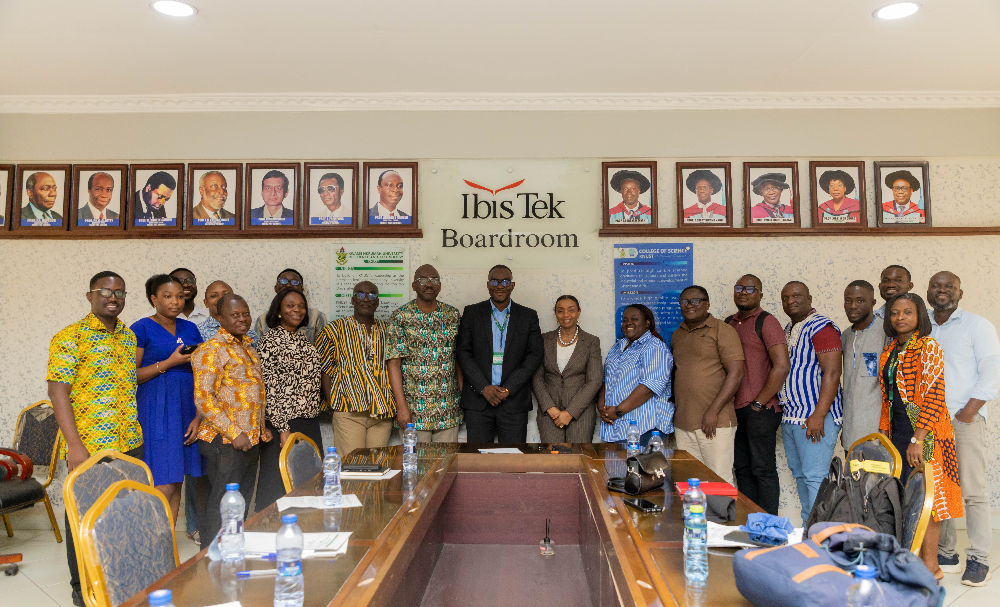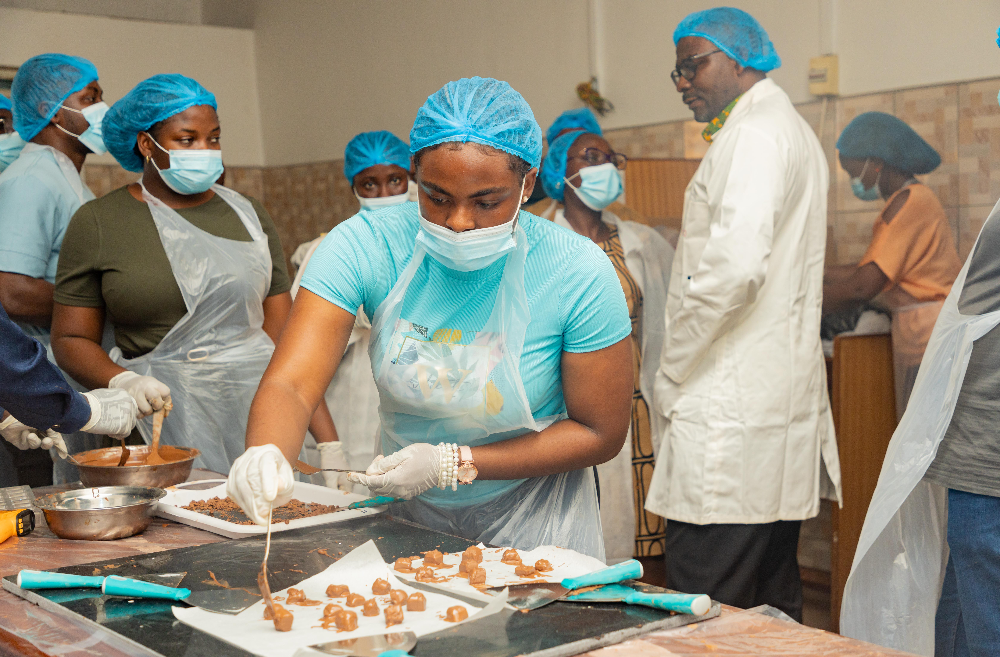
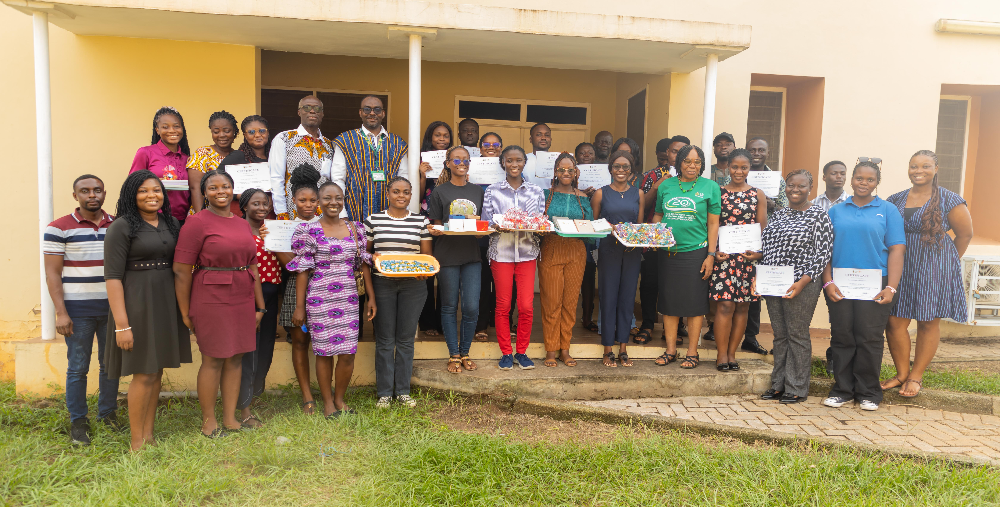
The Department of Food Science and Technology College of Science, KNUST has hosted a two-day artisanal chocolate-making short course aimed at equipping participants with practical skills to add value to Ghana’s cocoa and support small-scale agro-processing and entrepreneurship.
The training, brought together 29 participants from industry, small businesses and academia, as Ghana seeks to move beyond cocoa bean exports into premium chocolate production.
The short course forms part of the department’s broader effort to strengthen local agro-processing at a time when less than 20% of women and a limited number of young entrepreneurs graduate or operate within STEM- and food-processing-related value chains.

Explaining the motivation behind the programme, Professor Jacob Kwaku Agbenorhevi, Head of the Department of Food Science and Technology, said Ghana’s position as one of the world’s leading cocoa producers contrasts sharply with its low levels of local value addition.
“As a Department within KNUST, we believe academia must play a direct role in transforming primary agricultural commodities into high-value products,” he said.
Prof. Agbenorhevi noted growing global demand for premium, ethically sourced and handcrafted chocolate, presenting an opportunity for Ghanaian entrepreneurs.
“There is increasing interest among young entrepreneurs in artisanal and bean-to-bar chocolate production, and Ghana is well positioned to participate meaningfully in that niche market,” he added.
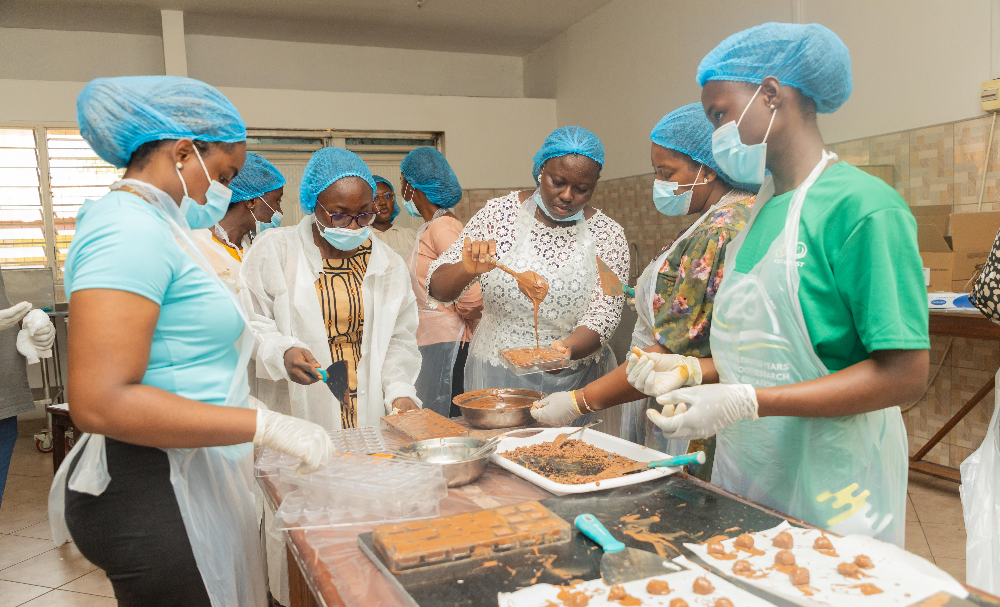
Participants were trained in cocoa fermentation, roasting, tempering, formulation, moulding, enrobing, packaging and food safety, with a strong emphasis on small-scale, high-value production models accessible to start-ups and youth-led businesses.
The training was delivered in collaboration with Cocoa Processing Company (CPC) Limited and the African Agri-Food Knowledge Transfer Partnership (AAKTP), ensuring strong industry and research linkages.
CPC provided industry expertise and quality standards, while AAKTP supported knowledge transfer between academia and industry. The AAKTP project involves KNUST, the University of Health and Allied Sciences (UHAS), the University of Huddersfield and CPC, with funding from Innovate UK, and focuses on sustainable innovations such as the use of okra pectin as a substitute for lecithin in chocolate production.
A Decade of Training ‘Chocopreneurs’
The 2026 training coincided with the 10th anniversary of the Chocolate Making Short Course, which was introduced in 2016 to promote cocoa value addition and entrepreneurship.
Since its inception, the programme has trained 73 aspiring ‘Chocopreneurs’, with participation growing steadily over the years. The latest edition marked the fourth formal short course, underscoring sustained interest and impact.
Participants See Immediate Benefits
Participants described the training as practical and business-focused.
Zaid Pro-Umar of HPW Fresh and Dry said the course deepened his understanding of chocolate behaviour and processing.
“My understanding of chocolate processing and the importance of tempering has really improved. We’re going back to apply what we’ve learned and improve our products,” he said.
For Naa Adoley Sowah, a third-year Food Science student at KNUST and owner of Naa’s Deluxe, the training offered a way to expand her existing business.
“The course has enhanced my knowledge on how to add value to my products and increase my market space,” she said.
Facilitators said the diverse background of participants from industry professionals to first-time entrepreneurs highlighted the programme’s broad relevance.
Dr. Asante, a cocoa industry expert with over 30 years’ experience, said the training focused not only on business but also on building appreciation for chocolate craftsmanship.
“For innovation, you can tick that box. For business, you can tick that box. But most importantly, participants have built networks and gained foundational skills they can build on,” he said.
Story by: Edith Asravor Photo by: Samuel Bioh