As we mark the International Day of Women and Girls in Science, the College of Science reflects on a defining moment, when a shared passion among faculty members led to the birth to Women in STEM Ghana (WiSTEMGh). What began as a simple idea has grown into a powerful initiative that continues to inspire, mentor and empower girls across Ghana.
An Idea Rooted in Passion and Leadership
WiSTEMGh did not begin as a funded project or a formal university programme. It started with conversations among a small group of in scientists in the College of Science who were united by a concern: women remained underrepresented in science, despite their proven potential.
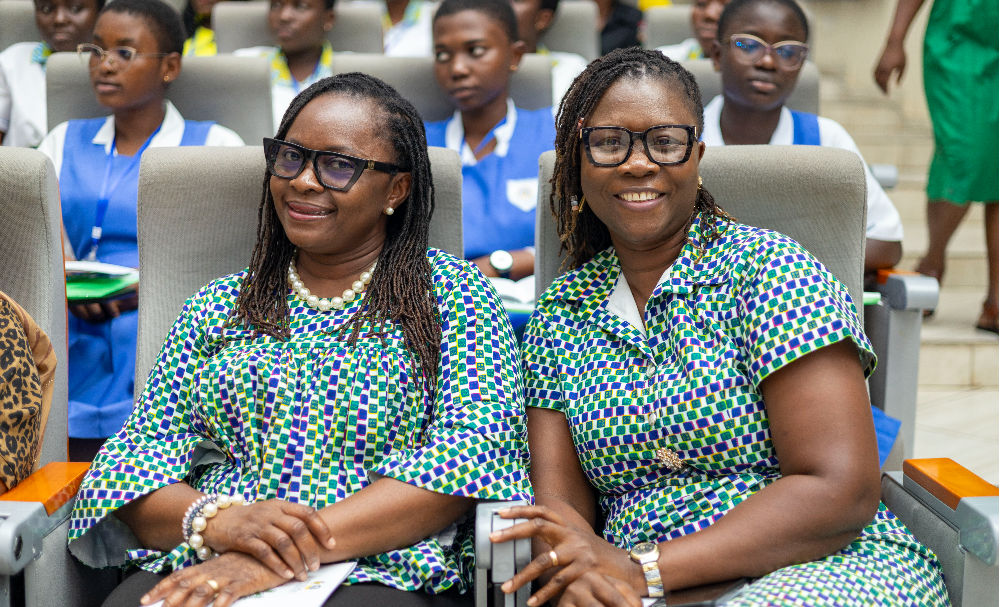
Professor (Mrs.) Ibok Nsa Oduro- President of WiSTEMGh, Professor of Postharvest Technology and the first female Provost of the College of Science, recalls that the initiative was driven by purpose.
“The concept came out of a passion by a few ladies to build the capacity of women in Science, technology, Engineering and Mathematics. It started as an idea-How do we go about it?”
The idea gained momentum in 2016 during Prof. Oduro’s tenure as Provost. At the same time, then Vice-Chancellor Professor Kwasi Obiri-Danso, publicly committed to prioritising the girl, child particularly in STEM. This alignment between institutional vision and faculty advocacy created fertile ground for WiSTEMGh to grow.
From Personal Experience to Collective Action
For Prof. (Mrs.) Mercy Badu, the Secretary of WiSTEMGh, the mission is deeply personal. Her interest in science was sparked during her participation in the Science, Technology and Mathematics Education (STME) Clinic for Girls as a senior high school student.
“Something in me was ignited,” she says. I wanted to do science, to use it, and help people appreciate its benefits.”
Years later at KNUST, she sought a platform where women scientists could support one another and extend that encouragement to younger girls. When discussions around WiSTEMGh resurfaced, she embraced the vision wholeheartedly.
“We weren’t called to write any proposal,” she recalls. “But we started writing anyway; reviewing ideas, shaping documents, because we knew we needed to build something.”
As the initiative grew, so did the realisation that empowerment must extend beyond the university community.
“If you build yourself up and don’t reach out, what’s the meaning of it?”
This philosophy pushed WiSTEMGh, towards outreach primary, junior high and senior high schools, where early exposure to STEM could make a transformative difference.
From KNUST to Classrooms Across Ghana
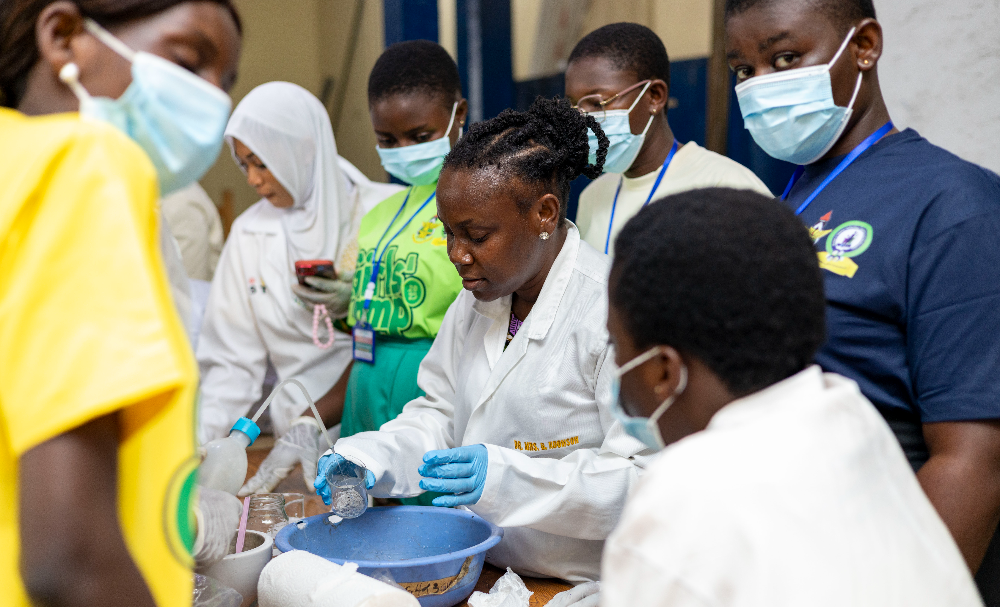
Established at KNUST in 2018, WiSTEMGh has involved into one of the University’s most impactful long-term mentorship and outreach initiatives. Through school engagements programmes, mentorship, activities, and its flagship WiSTEMGh Girls’ Camp, the initiative has expanded STEM access and confidence for girls across nationwide.
Participation has grown from fewer than 100 girls in its first year to over 300 annually, reaching more than 1,000 girls to date.
The progress is particularly meaningful in a national context where less than 20 percent of women graduate from STEM-related disciplines, and where systemic barriers, stereotypes and limited encouragement continue to affect participation.
The WiSTEMGh Girls’ Camp, an annual STEM boot camp for senior high school students, consistently demonstrates increased confidence, curiosity and ambition among participants.
Today, WiSTEMGh stands as a testament to what is possible happens when leadership, lived experience and institutional support converge to challenge the status quo.
For the women who helped bring the initiative to life, the reward lies in every girl inspired to dream bigger.
“Anytime you go there and you see the impact, even the little, you are so happy.”
Story by: Edith Asravor Photo by: Michael Kwawu