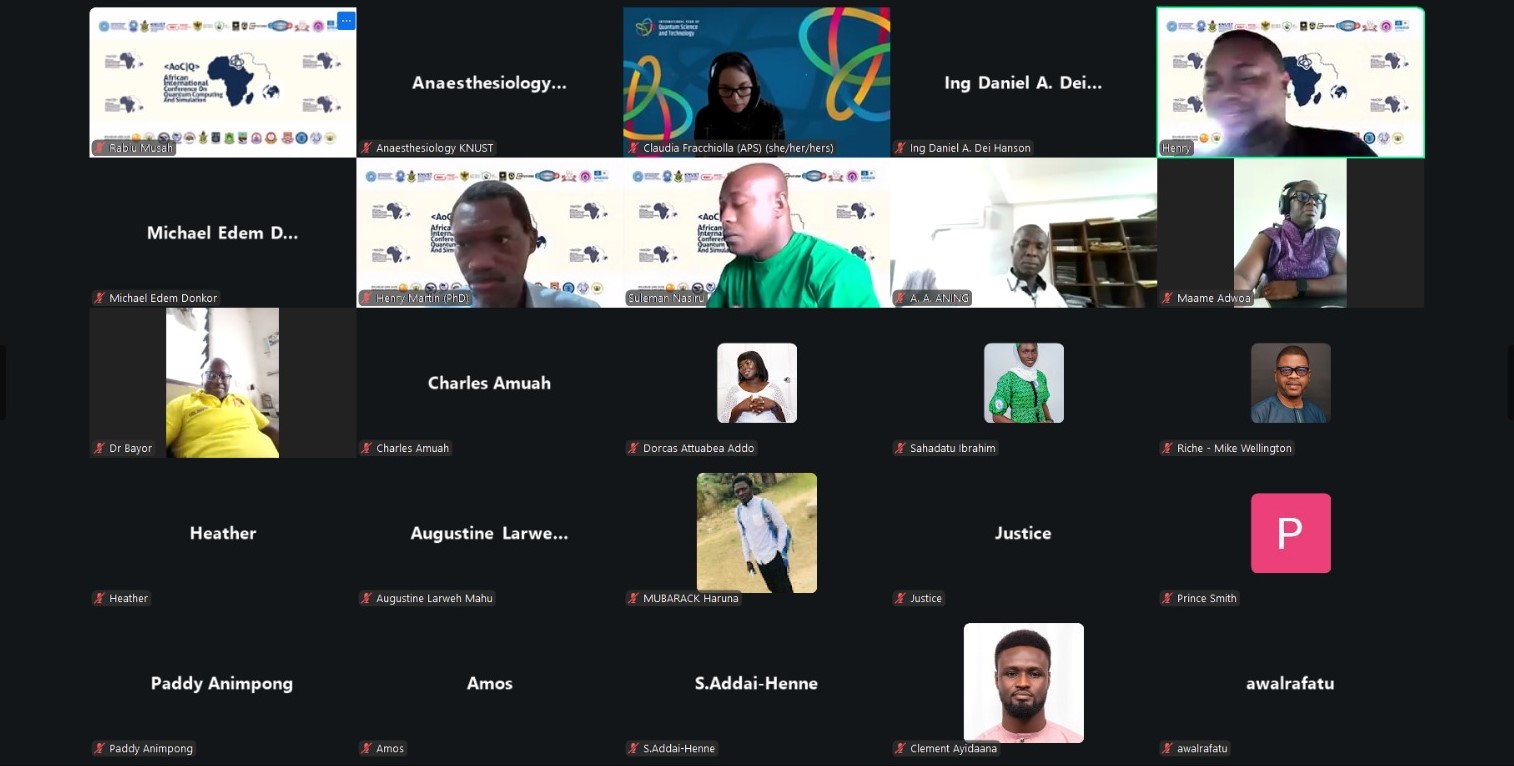
Ghana must act now to avoid being left out of the next wave of global technology driven by quantum science; speakers have advised at a pre-conference session held ahead of a major international meeting planned for 2026.
The advice was delivered during a stakeholder meeting organised in preparation for the African International Conference on Quantum Computing and Simulation, scheduled for February 2026, where participants discussed how quantum science could affect development, security and access to technology.
“Ghana and Africa have an opportunity, and it is an opportunity we must not miss,” said Richie-Mike Wellington, Deputy Secretary-General of the Ghana Commission for UNESCO, in his welcome address
The session was moderated by Henry Elorm Quarshie, who told participants that the discussion was meant to connect policy, education and research around a field that is already shaping global priorities.
“Whatever we are doing to promote quantum science must be inclusive. That is what UNESCO is looking for” Wellington said.
The main presentation was delivered by Claudia Fracchiolla, Head of Public Engagement at the American Physical Society and Secretary to the Coordinator of the UNESCO-endorsed International Year of Quantum Science and Technology.
Ms Fracchiolla said quantum science should not be treated only as a technical field but as a global system that determines who gets access to future technologies.
“Access determines participation,” she said, recounting how a lack of local expertise earlier in her career prevented her from pursuing quantum research. “Talent exists everywhere, but opportunity does not”
She explained that quantum technologies are already being used in areas such as medical imaging, navigation, cybersecurity and communications, even though large-scale quantum computers are still under development.
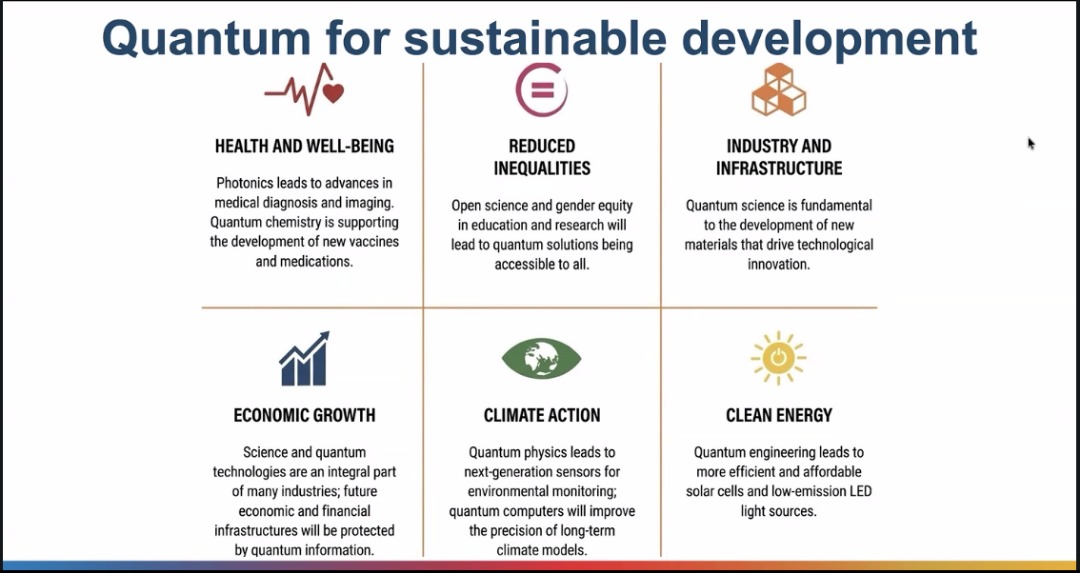
“Quantum technologies are not magic. They are a continuation of our effort to control the microscopic world” she said.
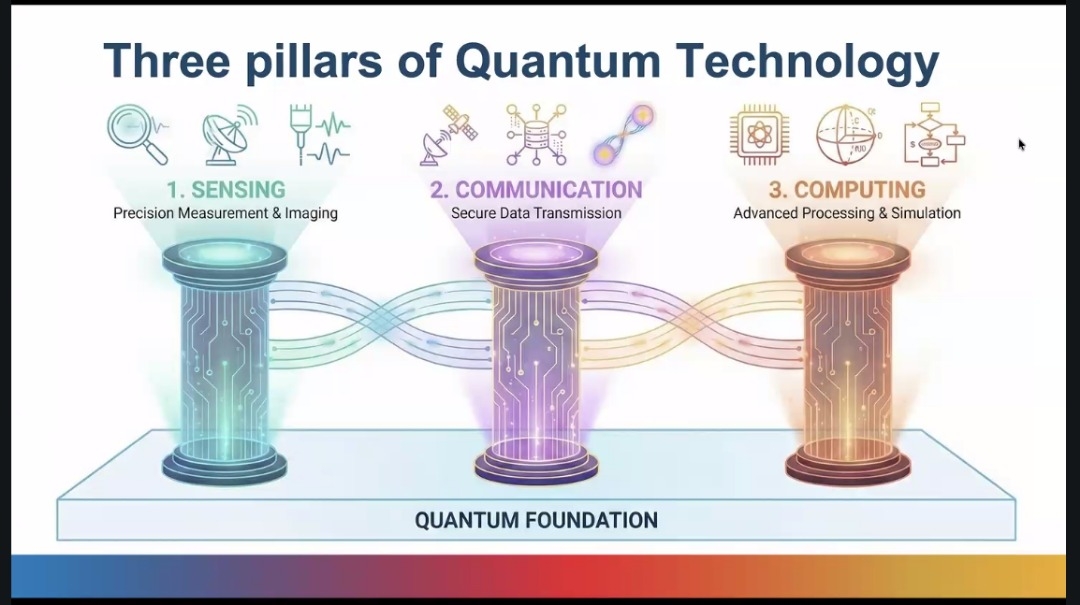
Ms Fracchiolla said the world is currently in what scientists describe as a second quantum revolution, marked by the ability to control single particles rather than large systems, opening new possibilities for sensing, communication and computing.
She pointed to growing public investment in quantum technologies, warning that most funding and infrastructure remain concentrated in the global north, raising concerns about inequality.