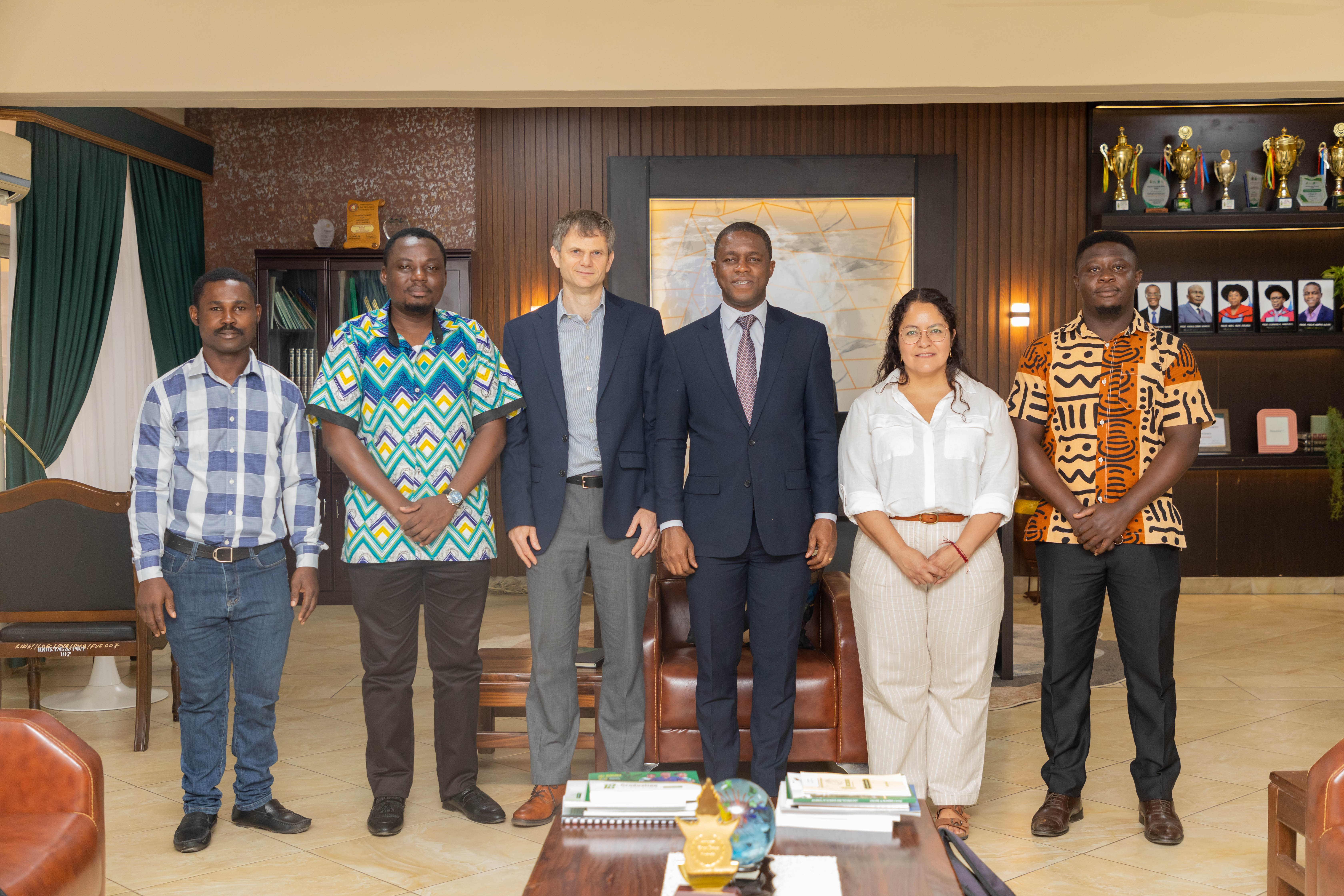
Solomon Barbere Kwaku, a third-year student in the Department of Physics at the College of Science, KNUST has been selected as a recipient of the Amplify Scholarship, earning US$10,000 to support his tuition and academic development in optics and photonics.
He was selected among ten students globally for the scholarship, which supports Black undergraduate and master’s students pursuing careers in optics and photonics.
Solomon is also a member of the KNUST Photonics Student Chapter, an SPIE and Optica student chapter under the Ghana Photonics and Optics Laboratory (GPOL) at KNUST that promotes research and innovation in photonics and optical technologies.
Each year, the Amplify Scholarship supports Black students to help ease the financial burden of higher education while creating opportunities for growth in the field of optics and photonics. Recipients also benefit from a one-year membership with Optica, access to mentorship, and an invitation to participate in the 2026 Amplify Optics Immersion Program.
Expressing excitement about receiving the scholarship, Solomon said he was surprised to be selected due to the highly competitive nature of the programme.
“I have been applying for a lot of scholarships, so being selected among ten students was a shock to me. I didn’t expect it because it was highly competitive,” he said.
He noted that the scholarship will support his academic journey and help him deepen his research in optics and photonics.
“It is going to help my education in optics and photonics. I will be working with Dr. Akyana Britwum, Dr. Michael Kweku Edem Donkor and the photonics team so that I can expand my knowledge in optics and photonics,” he said.
He added that his application was based on a project focused on developing a low-cost fibre optic communication system, which he worked on under the guidance of Dr. Akyana Britwum and Dr. Michael Kweku Edem Donkor, Principal Investigators of the lab.
The Amplify Scholarship is an initiative focused on supporting and empowering Black students pursuing careers in science. The programme invests in the next generation of scientists by providing financial support, mentorship and professional development opportunities to help scholars succeed in STEM fields.
By: Abena Serwaa Gyamfi