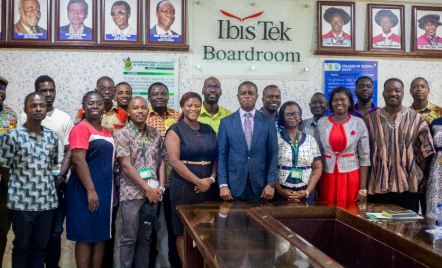


Principal Investigators (PIs) within the College of Science at Kwame Nkrumah University of Science and Technology (KNUST) have been urged to strengthen collaboration with the Office of Grants and Research (OGR) to enhance research productivity, improve compliance, and maximize the impact of externally funded projects.
The call, made during a workshop organized by the College's Office of Grants and Research, brought together Principal Investigators, college leadership, finance personnel, and grants management staff to discuss the grants management landscape, share experiences and challenges, and identify areas where targeted institutional support can improve research administration.

Opening discussions, the College's Grants and Research Manager, Mrs. Hannah Adom Eyison, highlighted significant growth in research activity within the first half of 2026. She noted the College circulated 314 funding opportunities, submitted 43 grant proposals, and secured 16 research awards between January and June 2026.
She noted that many Principal Investigators often assume multiple administrative responsibilities beyond their scientific roles, functioning simultaneously as project managers, accountants, procurement officers, reporting officers, and liaison personnel.
While this demonstrates commitment to project success, she explained that the arrangement can lead to burnout, reduced research productivity, compliance risks, delayed deliverables, and underutilization of grant funds.
Mrs. Eyison outlined the comprehensive support provided by OGR throughout the grant life cycle, including funding opportunity searches, proposal development and submission, contract review, award negotiations, compliance monitoring, reporting support, and project close-out processes.
She recommended the need for researchers to engage OGR much earlier in the grant process, from proposal development and budget preparation, award negotiations, project implementation through to reporting, and project closure to ensure compliance and improve project outcomes.

The College Finance Officer, Dr. James Gambrah, underscored the importance of sound financial management and compliance in donor-funded projects.
He reminded researchers that grant funds must be used strictly for approved activities and in accordance with donor agreements, University regulations, and Full Economic Costing (FEC) principles. He further stressed that all project expenditures must be supported by complete documentation and linked to approved budget lines.
Dr. Gambrah also highlighted common challenges that delay financial processing, including incomplete request documentation, late submission of payment requests, and failure to attach appointment letters, procurement records, or required approvals for project activities.
He briefed Principal Investigators on project closure requirements, including financial reconciliation, compliance reviews, asset transfer procedures, and the management of residual funds. He emphasized that project closure is a shared responsibility involving Principal Investigators, the Office of Grants and Research, Internal Audit, and the Finance Office.

Mr. Jeffery Yaw Kusi, a Senior Accounting Assistant at the College Finance Office, further highlighted management of special advances as one of the key concerns discussed during the session. He stressed that advances must be retired within 21 days of payment and supported with original receipts and other relevant documentation. Delays in the retirement of advances, he noted, can block project funds and affect future access to advances.
Professor Philip Antwi-Agyei, Provost of the College of Science commended the Principal Investigators for their dedication to advancing the College's research agenda and for their success in attracting competitive research funding despite an increasingly challenging funding landscape.
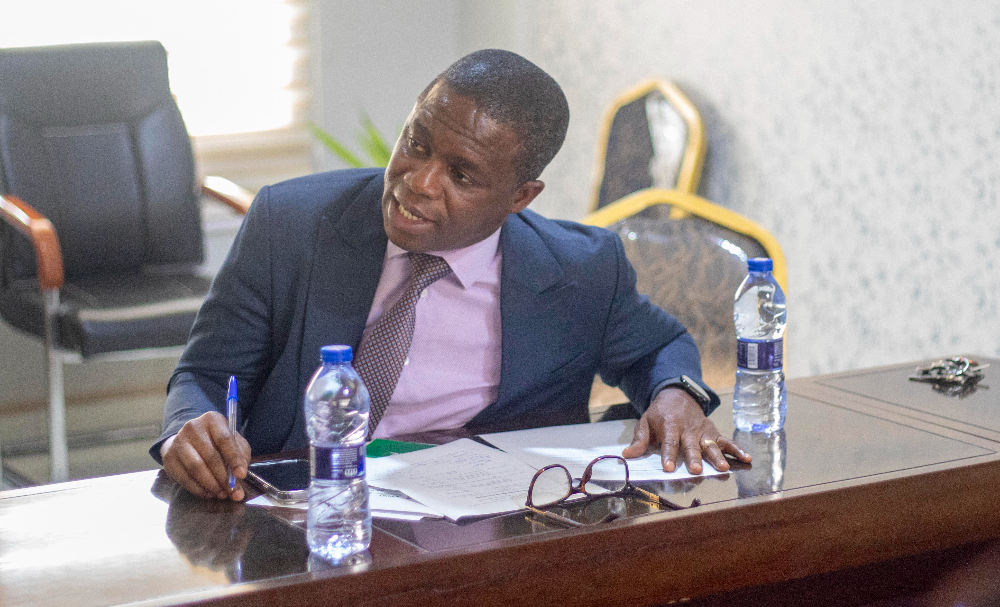
He emphasized that early engagement and adherence to established procedures would help prevent post-project challenges, including audit queries, reporting delays, unresolved financial obligations, and project close-out difficulties.
He encouraged researchers to view administrative and compliance processes not as obstacles, but as essential components of successful and impactful research management.
Throughout the discussions, participants shared experiences from managing grants and explored practical ways of improving coordination between researchers and support offices.